
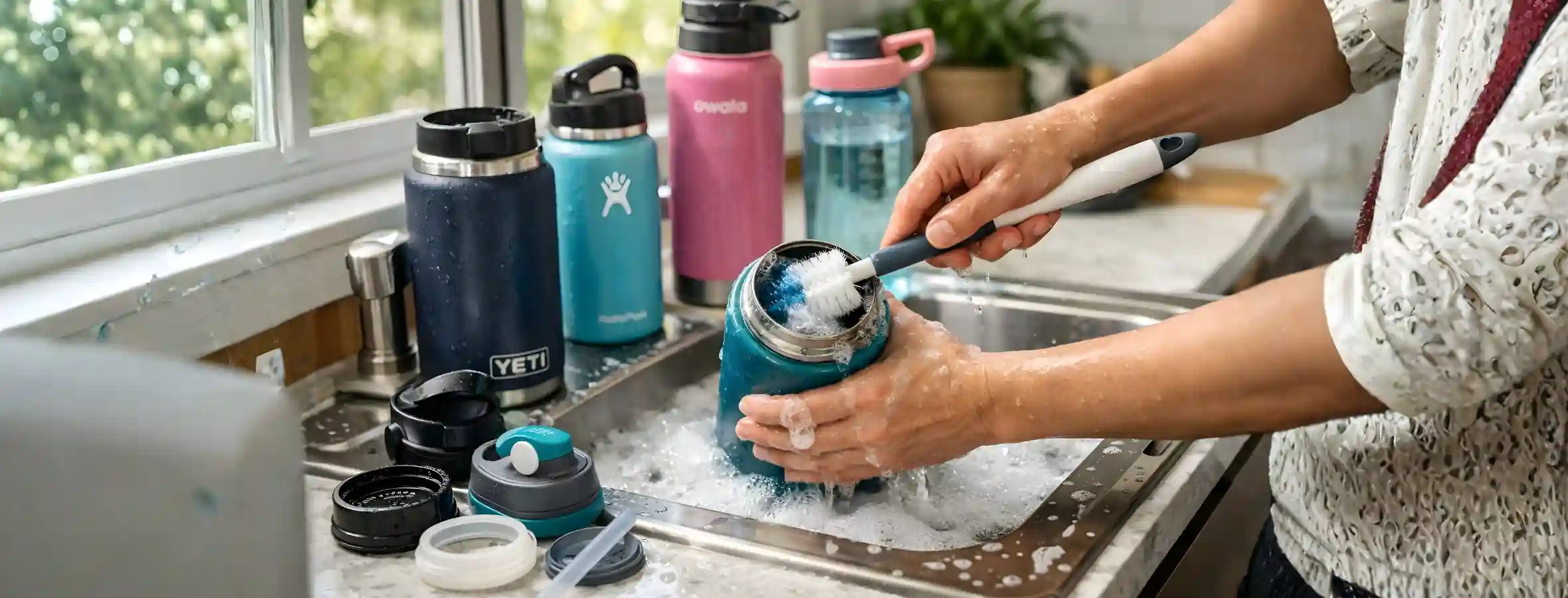
How to Clean Your Water Bottle: The Ultimate Guide for Every Material & Stubborn Messes

Leave a comment  /  Blog  By Zainab.K  / 11 March 2026

how to clean water bottle

Table of Contents

Knowing how to clean a water bottle properly is more important than most people realize.

Many people simply rinse their bottle with water and assume it’s clean, but that doesn’t remove the bacteria, moisture, and residue that slowly build up inside.

Some studies have also shown that bottles used daily without proper cleaning can develop noticeable bacterial growth.

I’ve personally noticed that when a bottle isn’t cleaned well, it often starts to smell even after rinsing. In many cases, the problem comes from hidden areas like lids, seals, or straws where residue collects.

This is especially important for reusable water bottles, which are commonly used by students, office workers, gym users, and travelers.

In this guide, I’ll explain simple daily cleaning methods, deep-cleaning solutions, and how to properly clean lids, straws, and other tricky parts to prevent odors, mold, and buildup.

Understanding the Problem: Why Your Bottle Gets Dirty (and Smelly)

Dirty stainless steel water bottle

Before learning the best way to clean a bottle, it helps to understand why bottles start to smell or develop buildup.

Even if you mostly drink water, moisture, drink residue, and hidden bottle parts can create the right conditions for bacteria, odors, and stains over time.

Bacteria Growth Inside Water Bottles

Water bottles often stay moist and closed for long periods, which makes them a suitable environment for bacteria to grow. A few common reasons include:

  • Moist environment: Bottles rarely dry completely between uses.

  • Warm temperatures: Bottles stored in bags, cars, or gym lockers can stay warm, which encourages bacterial growth.

  • Saliva transfer: Drinking directly from the bottle can introduce bacteria from the mouth back into the bottle.

General hygiene guidance from the CDC explains that frequently used items exposed to moisture should be cleaned regularly to reduce bacterial contamination.

Mold and Mildew in Hidden Areas

Some parts of a bottle trap moisture and are easy to miss during quick cleaning. Mold and mildew often develop in areas like:

  • Rubber lid seals

  • Straw tubes

  • Bottom corners of narrow bottles

If these areas stay damp for long periods, they can start to develop musty smells or small mold spots.

Residue from Drinks

Many people use their bottles for more than just water. Drinks that commonly leave residue include:

  • Protein shakes

  • Coffee

  • Electrolyte mixes

  • Juice

These drinks contain sugars, oils, or proteins that can stick to bottle walls and slowly lead to odors or bacterial buildup.

In my case, I drink tea and coffee quite often, and I’ve noticed that bottles used for these drinks tend to develop smells much faster if they are only rinsed with water.

Mineral Deposits from Hard Water

If you live in an area with hard water, minerals like calcium and magnesium can slowly build up inside bottles. This can appear as:

  • White film inside the bottle

  • Metallic or chalky taste

  • Scale buildup on bottle surfaces

While these deposits are common, they can affect taste and make the bottle look dirty if they aren’t cleaned regularly.

General Daily Cleaning: The Basic Soap & Water Method

Cleaning of a stainless steel water bottle

For most people, the easiest way to keep a bottle clean is with a simple daily wash using soap and warm water. This removes drink residue, bacteria, and odors before they have time to build up.

A basic soap-and-water cleaning routine is usually enough for daily maintenance, especially if you mostly drink water.

Step-by-Step Daily Cleaning Process

A simple routine can keep your bottle fresh and hygienic. Here’s the process most people can follow:

  1. Disassemble the bottle completely
    Remove the lid, straw, rubber seals, or any detachable parts. 

  2. Rinse with warm water
    Rinse the bottle and all parts to remove loose debris and leftover drink residue.

  3. Apply mild dish soap
    Add a small amount of dish soap inside the bottle. Mild soap works well because it breaks down oils and drink residue without damaging the material.

  4. Use a bottle brush
    Scrub the inside walls and bottom of the bottle with a long-handled brush to remove buildup.

  5. Clean lid threads and seals
    Pay extra attention to the lid, threads, and rubber seals. These areas often collect moisture and residue.

  6. Rinse thoroughly
    Rinse all parts with clean water to remove soap completely before letting the bottle dry.

Best Tools for Daily Bottle Cleaning

Using the right tools makes cleaning much easier and helps reach areas that are hard to scrub with a sponge.

This brush is designed to reach deep inside bottles, especially narrow ones. It helps clean the bottom and inner walls where residue often collects.

A thin straw brush is useful for cleaning straw tubes and narrow openings that regular brushes can’t reach.

Small detail brushes help clean lid threads, rubber seals, and tight corners where mold or residue can develop.

Deep Cleaning Solutions for Common Problems

nalgene water bottle soaking in a mixture of vinegar and warm water for deep cleaning

Even with regular washing, bottles can sometimes develop strong odors, stains, or hidden buildup.

This usually happens when residue from drinks sits inside the bottle for a long time or when the bottle stays closed while still damp.

When that happens, a deeper cleaning method can help restore the bottle and remove the buildup.

How to Remove Water Bottle Odors

If your bottle smells even after washing, it usually means bacteria or drink residue has built up inside.

Method 1: Vinegar Soak

Vinegar helps break down odor-causing residue.

Steps:

  1. Fill the bottle halfway with white vinegar

  2. Add warm water to fill the rest

  3. Let it soak overnight

  4. Scrub lightly with a bottle brush

  5. Rinse thoroughly with clean water

Method 2: Baking Soda Deodorizing

Baking soda helps absorb odors and loosen buildup.

Steps:

  1. Add 1–2 teaspoons baking soda to the bottle

  2. Fill with warm water

  3. Leave it overnight

  4. Scrub with a bottle brush

  5. Rinse well

Strong odors often indicate bacteria growth or trapped drink residue, especially if the bottle is used for coffee, shakes, or juice.

How to Remove Mold from a Water Bottle

Mold can develop when bottles stay damp for long periods, especially in hidden areas.

Common signs of mold

  1. Dark spots around lids or seals

  2. Musty smell

  3. Slimy buildup inside the bottle

Bleach Sanitizing Method

A diluted bleach solution can help disinfect bottles.

Steps:

  1. Mix 1 teaspoon unscented bleach with 1 liter (1 quart) of water

  2. Fill the bottle with the solution

  3. Let it sit for a few minutes

  4. Rinse thoroughly several times

  5. Wash again with dish soap

Natural alternatives

If you prefer non-bleach options:

  1. Vinegar soak

  2. Baking soda cleaning

  3. Hydrogen peroxide rinse

These methods can help remove mild mold or residue, though severe mold may require stronger sanitizing.

How to Remove Stubborn Stains

Some drinks can leave visible stains or cloudy residue, especially in plastic bottles.

Common causes include:

  1. Coffee stains

  2. Tea stains

  3. Protein shake residue

  4. Cloudy plastic bottles

Method 1: Baking Soda Paste

Steps:

  1. Mix baking soda with a little water to form a paste

  2. Apply inside the bottle

  3. Scrub with a bottle brush

  4. Rinse thoroughly

Method 2: Bottle Cleaning Tablets

Cleaning tablets help remove stains and residue.

Steps:

  1. Fill the bottle with warm water

  2. Drop in a cleaning tablet

  3. Let it dissolve and soak as directed

  4. Rinse well before using the bottle again

These methods usually work well for restoring bottles that have developed stains from regular use.
Material-Specific Cleaning Instructions

how to clean water bottle

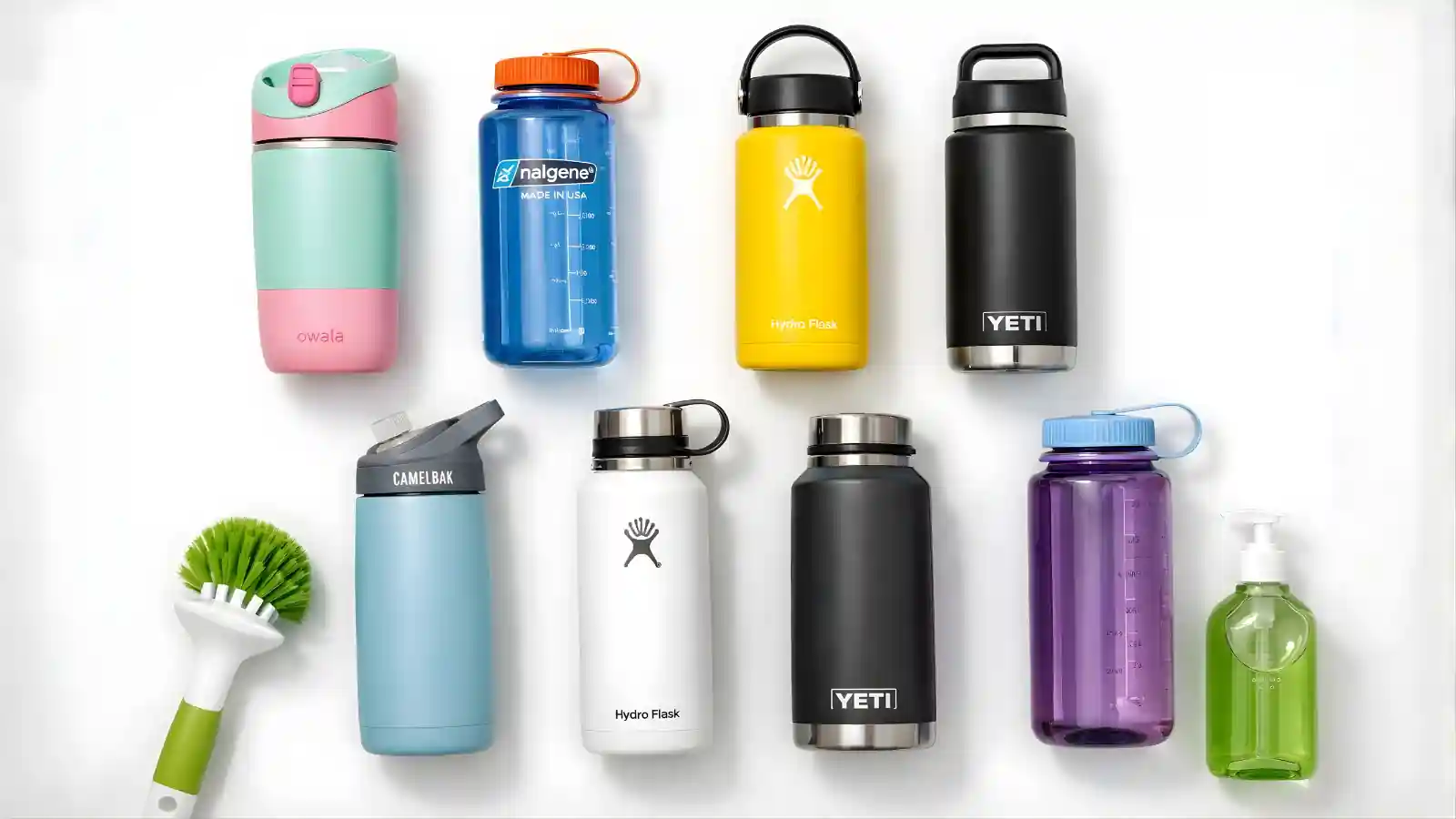
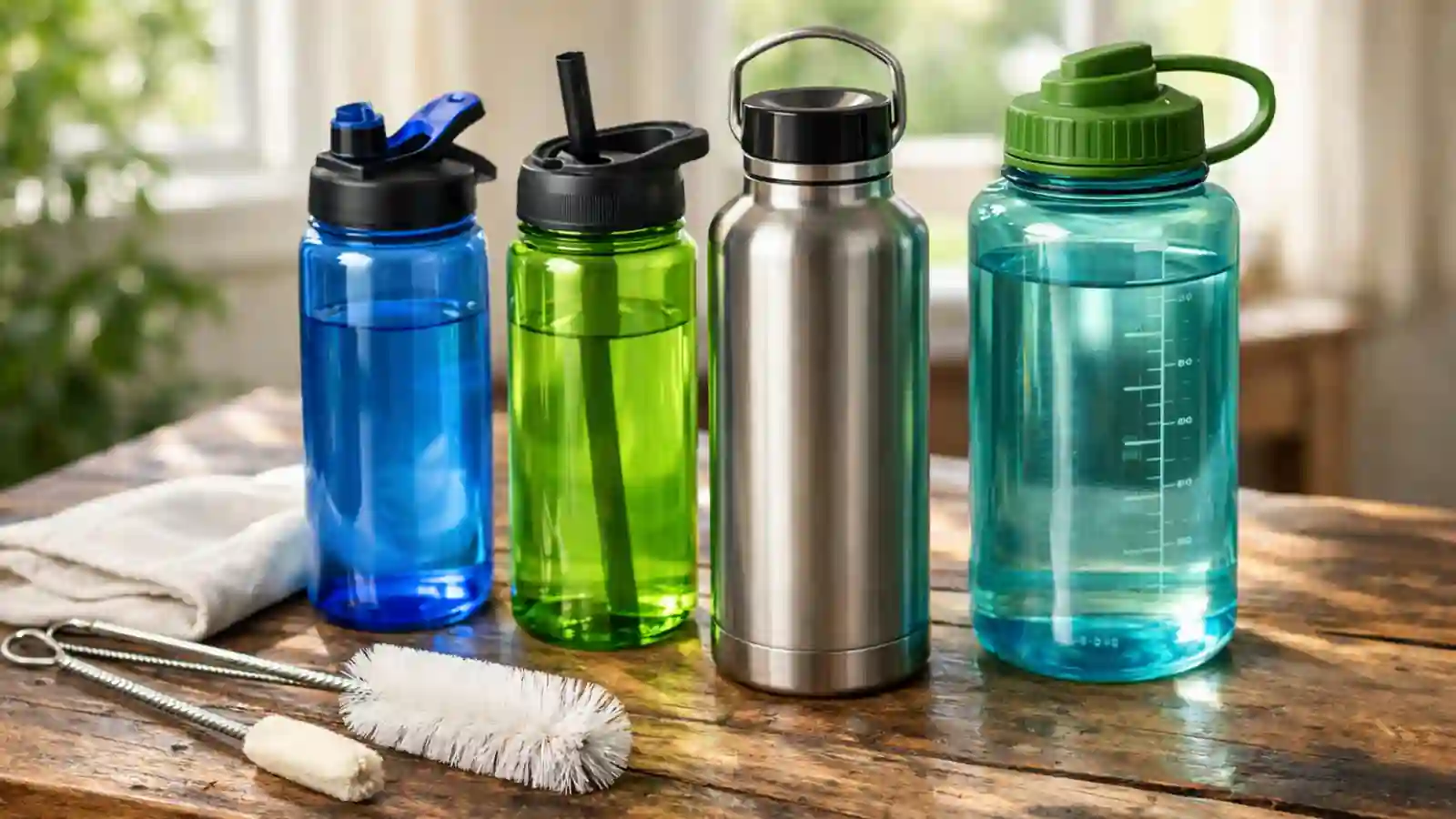
Not all bottles should be cleaned the same way. Different materials react differently to heat, cleaning agents, and scrubbing tools. Using the wrong method can damage the bottle, cause odors, or shorten its lifespan.

Understanding the right cleaning approach for each material helps keep your bottle safe, odor-free, and long-lasting.

How to Clean a Stainless Steel Water Bottle

Stainless steel bottles are durable and resist bacteria well, but they still need proper cleaning to prevent odors or residue buildup.

Daily cleaning method

  1. Fill the bottle with warm water and mild dish soap

  2. Use a bottle brush to scrub the inner walls and bottom

  3. Clean the lid and seals separately

  4. Rinse thoroughly and allow the bottle to air dry

Deep cleaning option

If the bottle develops odors or residue:

  1. Fill the bottle with a mixture of vinegar and warm water

  2. Let it sit for several hours or overnight

  3. Rinse well and wash with dish soap afterward

For a step-by-step guide, see our article on how to clean a stainless steel water bottle.

How to Clean a Plastic Water Bottle

Plastic bottles are lightweight and convenient, but they can absorb odors and stains more easily than other materials.

Basic cleaning method

  1. Wash with warm (not hot) water and mild dish soap

  2. Use a bottle brush to scrub the inner surface

  3. Rinse thoroughly to remove soap residue

For odors or buildup

  1. Add 1–2 teaspoons of baking soda

  2. Fill the bottle with warm water

  3. Let it sit overnight, then rinse and wash

How to Clean a Glass Water Bottle

Glass bottles are easier to clean because they don’t absorb odors or stains as easily as plastic.

Regular cleaning

  1. Wash with dish soap and warm water

  2. Scrub gently with a bottle brush

  3. Rinse thoroughly and allow it to dry.

How to Clean a Silicone Water Bottle

Silicone bottles are flexible and space-saving, but they can sometimes absorb odors over time.

Daily cleaning

  1. Wash with dish soap and warm water

  2. Scrub gently using a bottle brush

  3. Rinse well and allow it to dry completely

Deep cleaning for odors

  1. Add baking soda and warm water

  2. Let the bottle soak overnight

  3. Rinse and wash again with soap

How to Clean a Reusable Water Bottle (General Method)

A reusable water bottle can be made from materials like stainless steel, plastic, glass, or silicone. While each material has its own care instructions, there is also a general cleaning method that works for most reusable bottles.

If you use your bottle daily, a simple routine like this helps prevent odor, bacteria buildup, and stains.

Daily cleaning method

  1. Disassemble the bottle completely, remove the lid, straw, and rubber seals.

  2. Rinse with warm water to remove leftover residue.

  3. Add mild dish soap inside the bottle.

  4. Use a bottle brush to scrub the interior walls and bottom.

  5. Clean lid threads and seals, where moisture and residue often collect.

  6. Rinse thoroughly to remove all soap.

Deep cleaning

  1. Strong odors

  2. Visible stains

  3. Slimy residue inside the bottle

  4. Cloudy buildup

For a detailed step-by-step guide, see our article on How to Clean a Reusable Water Bottle.

Brand & Bottle-Type Cleaning Guides

Reusable water bottles and cleaning brushes

Some water bottles have unique designs or special components, which means they may need slightly different cleaning methods.

How to Clean an Owala Bottle

Owala bottles use a flip-top lid and built-in straw system, which makes them convenient but also means a few extra parts need attention during cleaning.

Personally, I don’t really like bottles with straws, so most of the bottles I use daily don’t have them. Straw systems can trap moisture and require a bit more effort to clean properly.

But if you use a bottle like Owala, cleaning the straw and lid components regularly makes a big difference.

Key cleaning steps

  1. Disassemble the lid to separate the straw and removable parts

  2. Wash the bottle with warm water and mild dish soap

  3. Use a straw brush to clean the internal straw tube

  4. Gently clean the silicone seals and lid threads, where moisture often collects

  5. Rinse thoroughly and let all parts air dry completely

Because Owala lids have small openings and spouts, regular cleaning helps prevent mold buildup inside the drinking spout.

For a easy step-by-step guide, see our article on How to Clean an Owala Bottle

How to Clean a Hydro Flask

Hydro Flask bottles are made with stainless steel vacuum insulation, which helps maintain temperature but still requires proper cleaning to prevent odors or stains.

Cleaning tips

  1. Wash the bottle with warm water and dish soap after regular use

  2. Use a bottle brush to reach the bottom of the bottle

  3. Avoid placing it in the dishwasher unless the manufacturer allows it

  4. For odors or stains, use a vinegar soak or baking soda cleaning method

  5. Coffee or tea stains can usually be removed with a baking soda paste

For a detailed guide, go through the How to Clean a Hydro Flask post.

How to Clean a CamelBak Bladder

CamelBak hydration systems use flexible water reservoirs (bladders) and long drinking tubes, which require careful cleaning to prevent bacteria or mold.

Important cleaning steps

  1. Empty and rinse the hydration reservoir with warm water

  2. Use a special cleaning brush designed for hydration tubes

  3. Clean the drinking tube and bite valve, where moisture often remains

  4. Allow the bladder to dry completely before storing

Proper drying is important because moisture trapped inside hydration packs can lead to mold growth over time.

For a more detailed guidance, see our article on How to Clean a CamelBak Bladder.

How to Clean a 5 Gallon Water Bottle

Large 5-gallon water bottles require a slightly different cleaning approach because of their size and narrow opening.

Basic cleaning method

  1. Fill the bottle with warm water and a small amount of vinegar

  2. Cover the opening and shake the bottle gently to loosen residue

  3. Use a long bottle brush if available to scrub the interior

  4. Rinse thoroughly several times with clean water

Before refilling, many people also sanitize the bottle using a diluted cleaning solution to remove bacteria and residue.

For a step-by-step guide, see our article on How to Clean a 5 Gallon Water Bottle

How to Clean Every Component: Lids, Straws & Seals

How to clean water bottle lids and other components

Many people wash the bottle body but overlook parts like lids, straws, and seals, where moisture and residue often collect.

From my experience, if a bottle isn’t cleaned properly, bacteria can build up and may even trigger skin issues like acne, which is something I obviously try to avoid.

Cleaning these small components regularly helps prevent odor, mold, and hidden buildup.

Cleaning Bottle Lids Properly

Bottle lids often have threads and small corners where residue can collect.

Steps

  1. Disassemble the lid if parts can be removed

  2. Wash with warm water and mild dish soap

  3. Use a small brush to scrub lid threads

  4. Clean hidden corners and drinking spouts

  5. Rinse well and air dry before reassembling

Cleaning Water Bottle Straws

Straws can trap moisture inside, which makes them prone to bacteria or mold buildup.

Steps

  1. Insert a straw brush through the tube

  2. Scrub with warm water and dish soap

  3. Rinse thoroughly from both ends

For deeper cleaning

  1. Soak the straw in warm water with vinegar or soap (15–30 minutes)

  2. Scrub again with a straw brush and rinse

Cleaning Rubber Seals and Gaskets

Rubber or silicone seals and gaskets help prevent leaks but can trap moisture underneath.

Steps

  1. Carefully remove the silicone seal

  2. Wash with warm water and mild soap

  3. Use a small brush or cloth to remove residue or mold

  4. Rinse thoroughly and dry completely

  5. Reinstall the seal properly to keep the lid leak-proof

Drying & Storage Best Practices for Prevention

how to dry water bottles

Cleaning a bottle is important, but how you dry and store it afterward matters just as much.

From my experience, bottles that are closed while still damp tend to develop smells much faster, even if they were cleaned properly. A simple drying and storage routine helps prevent that.

Proper Air Drying Techniques

After washing your bottle, let it air dry completely before putting the lid back on.

Best drying practices

  1. Dry the bottle upside down so water can drain out

  2. Place it on a drying rack or bottle stand if available

  3. Keep the lid and bottle separate while drying

  4. Avoid sealing the bottle while it’s still wet

Allowing proper airflow helps prevent moisture from staying trapped inside the bottle.

How to Store Water Bottles to Prevent Odor

Once the bottle is dry, storing it properly helps keep it fresh.

Storage tips

  1. Store the bottle with the lid off whenever possible

  2. Avoid humid cabinets or enclosed spaces

  3. Keep bottles in a place with good airflow

Proper storage helps reduce moisture buildup and lowers the chances of odor or bacteria developing inside the bottle.

Cleaning Frequency Guide: How Often Should You Clean?

How frequently we should clean our water bottles

How often you should clean a water bottle mostly depends on how frequently you use it and what you drink from it.

Daily Users (Gym, Athletes)

Bottles used during workouts or outdoor activities should be cleaned every day.

Recommended routine

  1. Wash with warm water and mild dish soap daily

  2. Clean lids, seals, and straws regularly

  3. Let the bottle air dry completely before closing

Frequent use, sweat, and sports drinks can increase bacteria growth, so daily cleaning helps prevent odors and buildup.

Office or School Use

If the bottle is mainly used for drinking water during the day, a lighter routine usually works.

Recommended routine

  1. Rinse daily with warm water

  2. Wash with dish soap once a day or every few days

  3. Do a deep cleaning once a week

This helps prevent odor and residue from developing over time.

Occasional Use

Bottles used occasionally should still be cleaned before storage.

Recommended routine

  1. Wash the bottle before and after use

  2. Let it dry completely before storing

  3. Perform a deep cleaning or sanitation once a month

This helps prevent stale smells and buildup when the bottle sits unused.

Troubleshooting Common Water Bottle Cleaning Issues

Select the problem you're facing with your water bottle and get the solution.

Cloudy Plastic Bottle
Metallic Taste in Stainless Bottle
Bad Odor That Won’t Go Away
Bottle Hygiene Scorecard
Take this 30-second quiz to check how hygienic your bottle cleaning habits are.

How often do you wash your bottle?

Do you use soap when cleaning your bottle?

How do you dry your bottle after washing?

Your Hygiene Score

Conclusion: Stay Hydrated, Stay Healthy

Keeping your water bottle clean is a simple habit that helps prevent bacteria, odors, and buildup. In most cases, washing it regularly with mild soap and warm water, cleaning the lid and small parts, and letting it air dry completely is enough to keep it hygienic.

From what I’ve noticed, bottles that are cleaned and dried properly rarely develop the smells or residue people often complain about. Making this a regular routine helps keep your bottle fresh, safe, and ready for daily hydration.

Zainab Khursheed!

Hey there, I’m Zainab. I created Water Bottles Experts to remove the guesswork from choosing the right drinkware for your lifestyle.

Every product featured here is evaluated with real-life use in mind, focusing on durability, insulation, and everyday convenience.

After learning, how consistent hydration impacts overall well-being, I now share practical guides, comparisons, and honest reviews to help you make informed, confident choices about water bottles and all drinkwares that truly work for daily life.

Over the years, I’ve researched and compared dozens of water bottles, focusing on material safety, insulation performance, and long-term usability rather than short-term trends.

Related Posts

Leave A Comment