How to Clean Reusable Water Bottles (Simple Daily & Deep Cleaning Guide)
Leave a comment / Blog / By Zainab.K / 11 March 2026
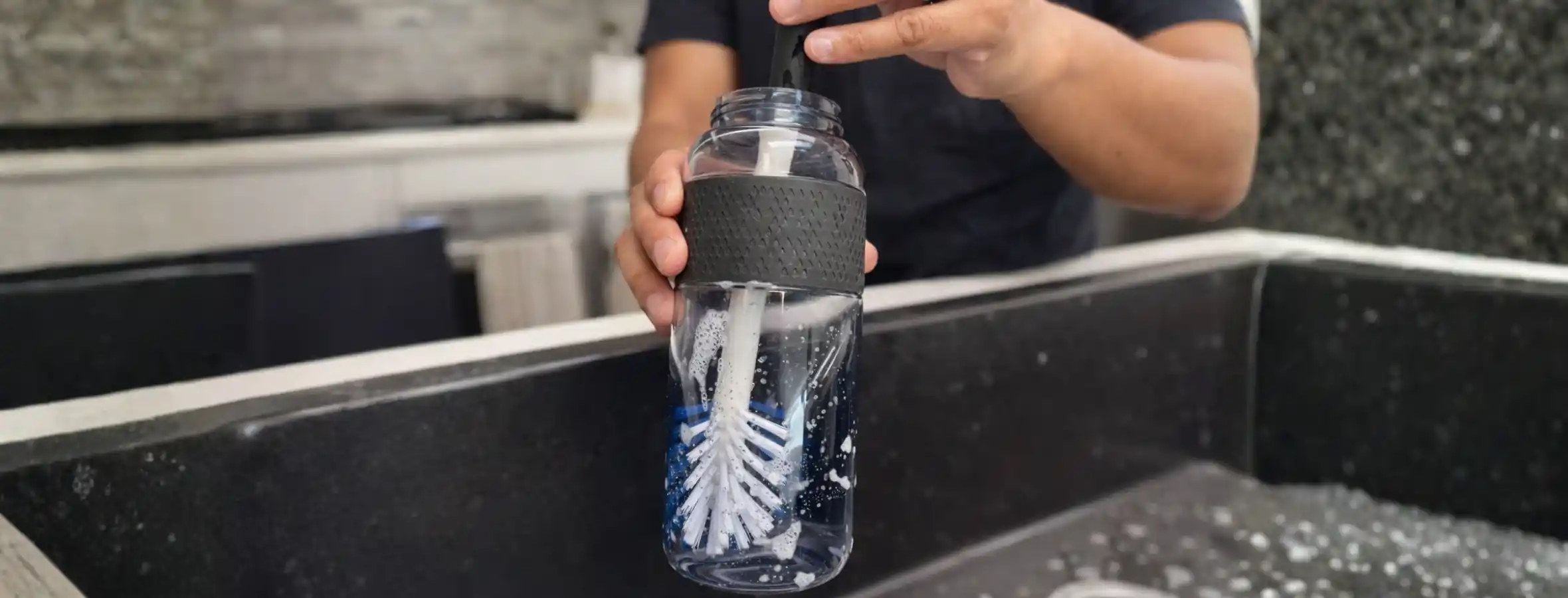
Table of Contents
Carrying a reusable water bottle is a great habit. It helps you stay hydrated throughout the day and reduces single-use plastic waste, which is better for the environment.
However, many people forget one important thing: reusable water bottles need regular cleaning.
A quick rinse with water might make the bottle look clean, but it doesn’t always remove the bacteria that can slowly build up inside. Every time you drink from the bottle, small amounts of bacteria from your mouth can transfer to the rim or inside surface.
When the lid is closed, moisture can remain trapped inside, creating an environment where bacteria or even mold may grow over time.
This is often when people start noticing unpleasant odors or the water tasting slightly strange. Regular cleaning helps prevent these problems and keeps your bottle safe to use.
In this guide, I’ll walk through simple and practical ways to clean reusable water bottles properly so they stay fresh, hygienic, and safe for everyday use.
Simple Daily Cleaning Routine

If you want to keep your reusable water bottle fresh and safe, a simple daily cleaning routine can make a big difference. It doesn’t take much time, but it helps prevent bacteria, odor, and residue from building up inside the bottle.
Here’s an easy step-by-step routine most people can follow.
- Rinse with warm water
Start by rinsing the bottle with warm water. This helps remove leftover liquid and reduces the chance of bacteria building up inside. - Add mild dish soap
Add a few drops of mild, fragrance-free dish soap and fill the bottle with warm water. This type of soap is generally considered safe for regular cleaning and works well for removing everyday residue. - Scrub the inside
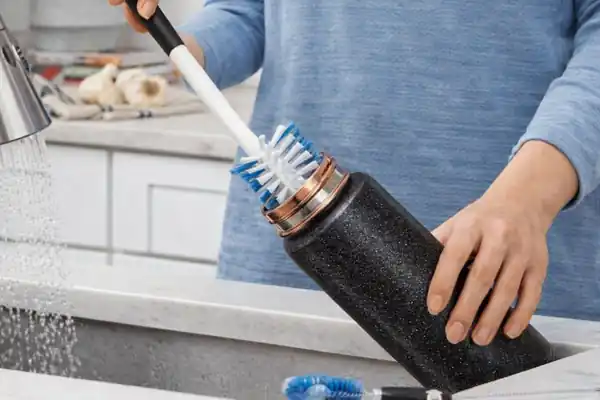
Use a bottle brush to scrub the inside walls and bottom of the bottle. In my experience, bottles that aren’t scrubbed properly often develop odor faster, especially around the bottom corners. - Clean the lid and straw separately
Detach the lid, straw, or silicone seals if your bottle has them. These parts often trap moisture and bacteria, so it’s best to clean them separately with a small brush. - Rinse thoroughly
Rinse the bottle and all parts under clean running water to make sure no soap residue remains. - Air dry upside down
Place the bottle upside down on a drying rack and let it air dry completely. Proper drying helps prevent trapped moisture, which can encourage bacteria or mold growth.
Pro tip: If you only use water in your bottle, this quick daily cleaning routine is usually enough to keep it fresh.
For a detailed step-by-step guide on cleaning different types of water bottles, see our guide on how to clean a water bottle.
Your Recommended Cleaning Schedule
Deep Cleaning Methods to Remove Odor & Germs

Sometimes a reusable water bottle can develop stubborn odors, mineral stains, or residue that a quick daily rinse doesn’t fully remove. In those situations, a deeper clean can help restore the bottle and keep it safe for regular use.
I’m a bit particular about bottle hygiene because I have OCD, so the idea of hidden mold or mystery smells inside my bottle really bothers me. Over time, I’ve evaluated several cleaning methods just to make sure my bottle is actually clean.
1. Baking Soda Method
Baking soda is one of the simplest ways to remove odor from a water bottle.
Steps:
Add 1 spoon of baking soda to the bottle.
Fill the bottle with warm water.
Let it soak for 15–20 minutes.
Use a bottle brush to scrub the inside gently.
Rinse thoroughly with clean water.
Baking soda works because it’s a mild alkaline compound that neutralizes acidic odors and helps lift residue from surfaces.
2. Vinegar Method
If your bottle has mineral stains or lingering odors, a vinegar soak can help.
Steps:
Mix half white vinegar and half warm water.
Fill the bottle with the solution.
Let it soak for several hours or overnight.
Rinse thoroughly with clean water.
Vinegar contains acetic acid, which helps dissolve mineral deposits and creates an environment where many bacteria cannot grow easily.
3. Cleaning Tablets
Cleaning tablets are a convenient option if you want a quick deep clean without much scrubbing.
Steps:
Fill the bottle with clean water.
Drop one cleaning tablet inside.
Allow the tablet to dissolve and fizz.
Let it sit according to the instructions.
Rinse the bottle thoroughly before use.
These tablets are commonly used for drinkware and can help remove odor and buildup easily.
Are Reusable Water Bottles Dishwasher Safe?

Many reusable water bottles are dishwasher safe, but it depends on the material and the manufacturer’s instructions.
In general:
Stainless steel bottles are sometimes dishwasher safe, but hand washing is usually recommended to protect insulation and coatings.
Plastic bottles are often labeled dishwasher safe, especially on the top rack.
Glass bottles are typically safe for dishwasher cleaning.
Insulated bottles with vacuum seals are usually better cleaned by hand.
If a bottle is labeled dishwasher safe, occasional hand washing with a bottle brush helps clean areas that dishwashers may miss, especially around the lid or silicone seals.
What Water Bottles Are Easiest to Clean?

Some water bottles are easier to clean than others, mainly because of their design.
Bottles that are usually easier to clean include:
Wide-mouth bottles, which allow a bottle brush to reach inside easily
Bottles with simple lids, without too many small parts or straws
Glass bottles, because they don’t absorb odor or stains easily
Stainless steel bottles, which are durable and simple to scrub
From my experience, bottles with narrow openings or complex straw lids often require more effort to clean properly. Choosing a bottle with a simple design can make daily cleaning much easier.
Conclusion
Keeping your reusable water bottle clean doesn’t require complicated steps. A simple daily rinse along with occasional deep cleaning can help prevent odor, bacteria buildup, and residue.
Small habits like washing the bottle regularly, cleaning the lid properly, and letting it dry completely can make a big difference over time.
With the right cleaning routine, your reusable bottle can stay fresh, safe, and ready for everyday use.
Zainab Khursheed!
Hey there, I’m Zainab.
I created Water Bottles Experts to remove the guesswork from choosing the right drinkware for your lifestyle.
Every product featured here is evaluated with real-life use in mind, focusing on durability, insulation, and everyday convenience.
After learning, how consistent hydration impacts overall well-being, I now share practical guides, comparisons, and honest reviews to help you make informed, confident choices about water bottles and all drinkwares that truly work for daily life.
Over the years, I’ve researched and compared dozens of water bottles, focusing on material safety, insulation performance, and long-term usability rather than short-term trends.
How We Researched This Guide
This guide is based on a detailed comparison of manufacturer specifications, insulation ratings, material safety information, and patterns found in verified customer reviews and expert discussions. The goal is to present accurate, unbiased information to help readers make an informed decision.
In addition to manufacturer specifications, each bottle was evaluated based on real-world daily use in hot climates, focusing on cold retention duration, leakage during travel, ease of cleaning, and comfort during extended carry.
Insulation performance was assessed using ice retention observations over a full day, while durability feedback was cross-checked with long-term user reports to identify consistent patterns rather than isolated experiences.