Safest Water Bottles 2026: Hidden Lead Risks & Non-Toxic Picks

Leave a comment  /  Blog  /  By Zainab.K  /  Updated: 24 September 2026

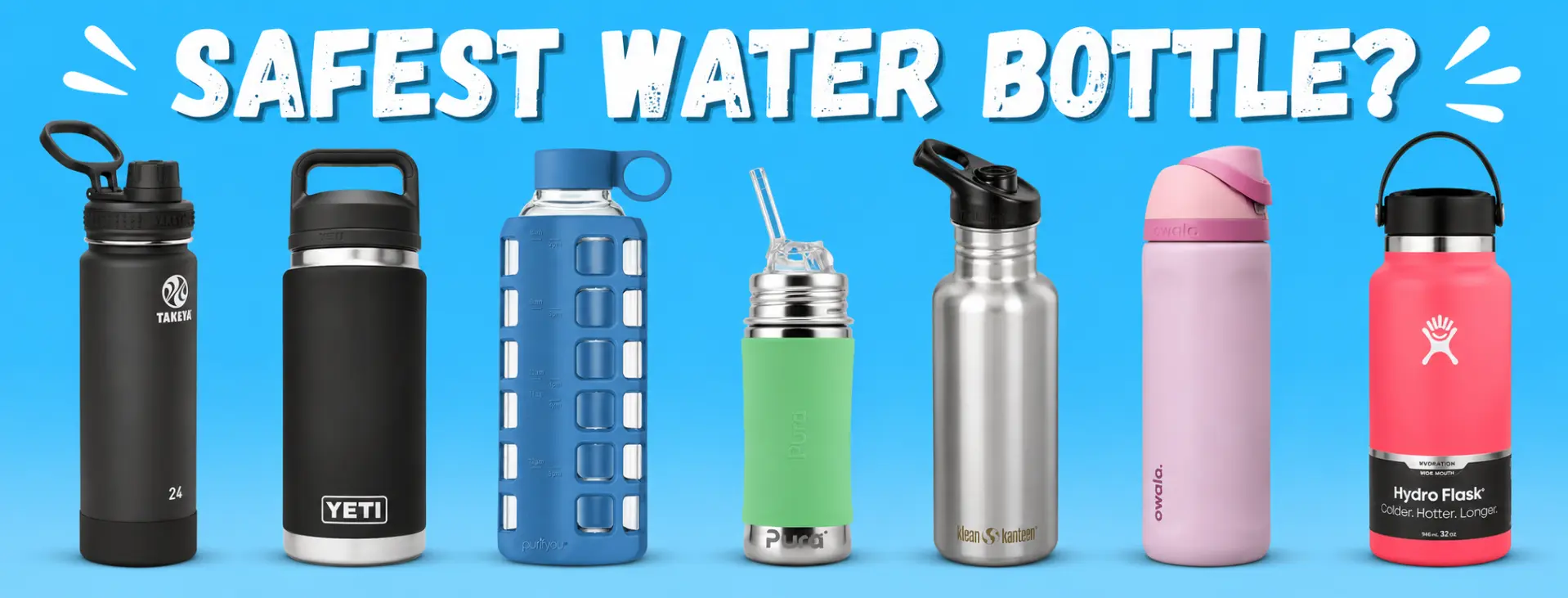
Safest water bottle comparison featuring Takeya, YETI, Purifyou, Pura, Klean Kanteen, Owala, and Hydro Flask bottles.

Quick Answer

The safest water bottle depends on the entire construction, not just whether the label says BPA-free. For most people, glass and high-quality stainless steel are the strongest everyday choices, but the lid, gasket, straw, coating, and vacuum-sealing area matter too.

For insulated bottles, look for clear material disclosures and independent testing where available, especially around the sealing dot at the base. Hydro Flask has one of the stronger published independent testing histories for newer bottles, while Owala also combines manufacturer lead-free claims with published XRF testing of tested products.

For long-term safety, choose a bottle that matches your drink, follow the manufacturer’s care instructions, and replace damaged seals, lids, straws, or coatings when needed.

How this guide was researched: I compared current manufacturer specifications, material disclosures, independent XRF testing where available, third-party certifications, and recurring user feedback. I do not personally test every bottle featured here.

This article may contain affiliate links. As an Amazon Associate, I may earn from qualifying purchases at no extra cost to you.

Table of Contents

A water bottle labeled “BPA-free” can still contain materials you may not expect, including lead in the hidden sealing area of some vacuum-insulated stainless steel bottles.

This sealing point usually sits at the bottom of the bottle, outside the drinking chamber and beneath a protective cover. The concern is not that every stainless steel bottle contains lead, but that “BPA-free” tells you very little about the bottle’s other components.

It also does not guarantee freedom from other bisphenols such as BPS or BPF, which have raised similar concerns in research.

That is why choosing the right water bottle means looking beyond the label and checking materials, bottle construction, independent testing, and component condition.

Key Takeaways

  1. BPA-free does not mean free from every potentially concerning chemical.
  2. Lead can be used in the vacuum-sealing area of some insulated bottles.
  3. Bottle construction and component condition matter as much as the main material.
  4. Independent testing and manufacturer disclosures are more useful than marketing claims alone.

Quick Picks (If You’re in a Hurry)

Short on time? These are the safest water bottles you can buy right now

Hydro Flask
Owala FreeSip
Klean Kanteen
Pura Kiki
Purifyou Glass
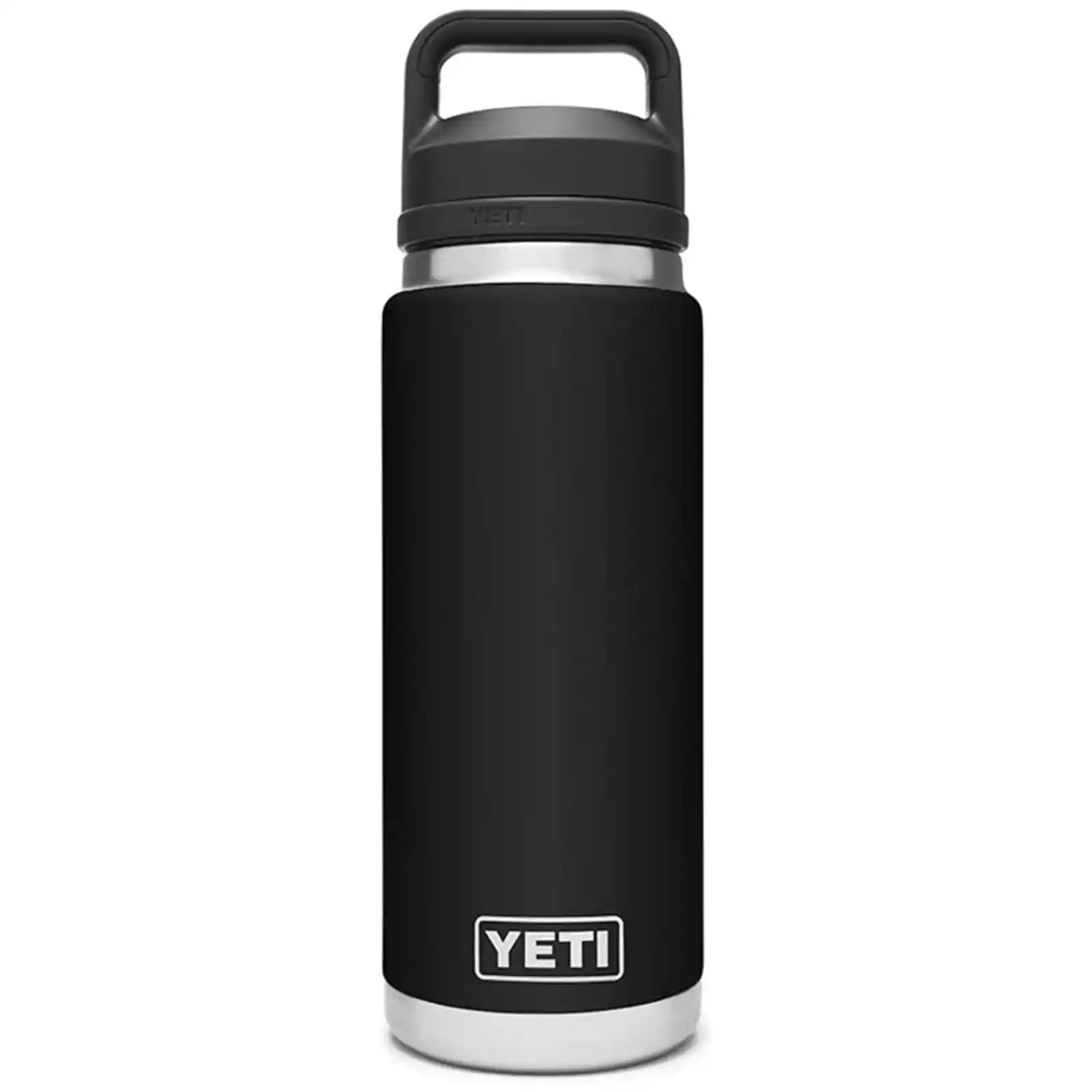
YETI Rambler
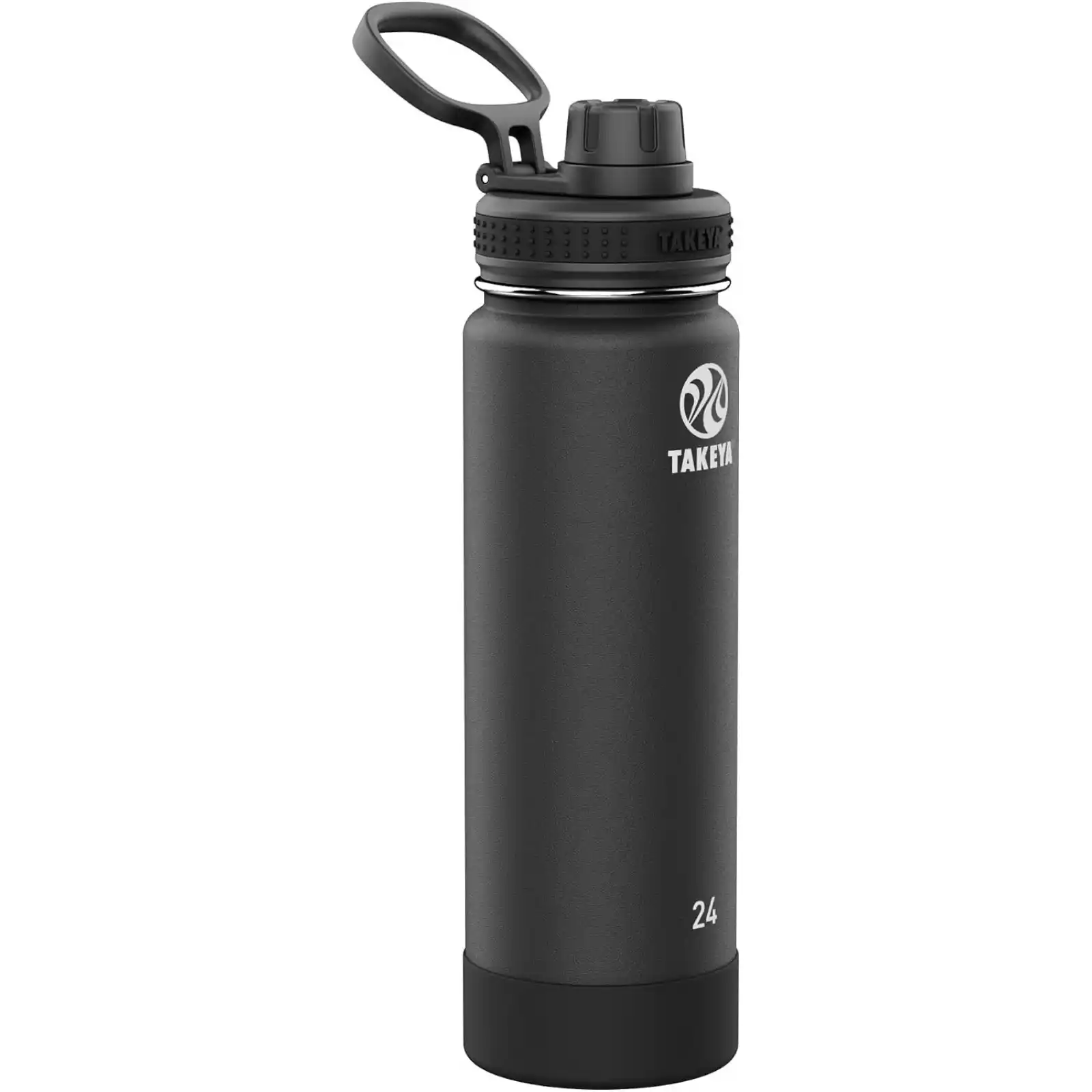
Takeya Actives
Hydro Flask Stainless Steel Water Bottles
Owala FreeSip
Klean Kanteen Classic
Pura Kiki
Purifyou Glass Water Bottles
Yeti Rambler 26 oz Bottle with Chug Cap
Takiya Actives

Understanding What Makes a Water Bottle Unsafe

Safest water bottles

Choosing a safer water bottle means looking beyond labels like “BPA-free” or “stainless steel.”

The bottle body matters, but so do the vacuum seal, lid, straw, gasket, coating, and other components that make up the bottle.

Here are the main concerns worth understanding.

1. Hidden Lead in Insulated Stainless Steel Bottles

In many vacuum-insulated bottles, the stainless steel body itself is not the main concern.

Some manufacturers use a small sealing pellet at the bottom of the bottle to close the opening created during the vacuum-insulation process. That sealing material can contain lead.

Stanley, for example, confirms that a lead-containing sealing material is used in part of its manufacturing process. The area is covered by stainless steel so it does not normally come into contact with the user or beverage.

This distinction is important.

Finding lead somewhere in a bottle does not automatically mean lead is leaching into your water. What matters is:

  1. where the lead-containing material is located,
  2. whether it is fully enclosed,
  3. and whether the protective covering remains intact.

This is also why an 18/8 or food-grade stainless steel label alone cannot tell you everything about how a bottle is made.

Independent methods such as XRF screening can help identify metals in individual components rather than relying only on marketing claims.

2. BPA, BPS, and BPF

A BPA-free label tells you that BPA has been addressed, but it does not necessarily mean the bottle is free from every bisphenol.

BPS and BPF are two alternatives that have been used in place of BPA. Research has found that both can show hormone-related biological activity.

That does not mean every BPA-free bottle contains BPS or BPF. It simply means BPA-free should not be treated as a complete safety guarantee.

When possible, look for clear information about the materials used in the bottle, lid, straw, and other food-contact parts.

3. Cadmium and Coatings

Cadmium has been associated with some pigments and coatings used in consumer products.

However, you cannot tell whether a bottle contains cadmium simply because it is colorful or painted.

The more reliable approach is to look for:

  1. manufacturer material disclosures,
  2. independent testing,
  3. and credible safety certifications.

Appearance alone is not enough to judge whether a coating is safe.

4. Phthalates in Plastic Components

Phthalates are commonly used as plasticizers in certain flexible plastics, particularly materials such as PVC.

But not every flexible straw, gasket, lid, or silicone component contains phthalates.

The actual material matters more than how soft or flexible the part feels.

If a manufacturer clearly identifies the materials used in food-contact components, that information is more useful than assuming all flexible plastics carry the same risk.

5. Microplastics and Wear

Microplastics have been detected in both tap and bottled drinking water, and researchers are still studying their sources and potential health effects.

Reusable plastic components can also wear over time through scratching, abrasion, heat, and repeated use.

Pay attention to parts that become:

  1. heavily scratched,
  2. cracked,
  3. cloudy,
  4. warped,
  5. or visibly worn.

Replacing damaged lids, straws, gaskets, or bottles is a sensible precaution.

Key Takeaway: A safe water bottle is not defined by one label or one material.

Look at the entire bottle construction, especially the parts that contact your drink, the condition of replaceable components, and any reliable testing or material information provided by the manufacturer.

If you are still deciding between materials and designs, my guide to reusable water bottles can help you compare the options.

Safest Water Bottle Materials: Pros, Cons, and Best Uses

best safest water bottle material

The safest water bottle material depends partly on what you drink and how you use the bottle. Glass offers minimal interaction with beverages, while stainless steel gives you a better balance of durability and everyday practicality.

Here’s a quick comparison before we look at each material.

Water Bottle Material Comparison
Material Best For Main Consideration
Glass Hot, cold, and acidic drinks Heavy and breakable
Stainless steel Everyday water, travel, outdoor use Contains nickel in common 18/8 grades
Titanium Lightweight premium bottles Expensive; alloy matters
Silicone Collapsible bottles, seals, and gaskets Quality varies
Aluminum Lightweight everyday use Usually relies on an interior lining
Plastic Lightweight, cold-water use Material type, heat, scratches, and wear matter

1. Glass: Best for Minimal Material Interaction

PROS

  • No BPA or bisphenols in the glass itself

  • Does not retain flavors or odors easily

  • Easy to clean

  • Good option for acidic beverages

CONS

  • Heavier than plastic or metal

  • Can break if dropped

  • Less convenient for outdoor activities

Glass is one of the simplest choices when you want very little interaction between your drink and the bottle itself.

It works particularly well for water, coffee, tea, citrus water, and other acidic drinks. Borosilicate glass also handles temperature changes better than ordinary soda-lime glass.

Best For: Home, office, coffee, tea, flavored water, and anyone prioritizing minimal material interaction.

2. Stainless Steel: Best Overall for Everyday Use

PROS

  • Strong and long-lasting

  • Excellent for insulated bottles

  • Resistant to corrosion

  • Good for travel and outdoor use

CONS

  • Heavier than plastic

  • Can dent

  • Common 18/8 steel contains nickel

Food-grade 18/8 stainless steel contains roughly 18% chromium and 8% nickel. It is durable, corrosion-resistant, and one of the most practical materials for reusable water bottles.

Stainless steel is especially useful when you need insulation and durability. However, it is not completely inert. Research on stainless steel food-contact materials shows that small amounts of nickel and chromium can migrate under certain conditions, particularly with acidic contents, heat, and longer contact times.

For normal water use, quality stainless steel remains a practical choice. People with a known nickel sensitivity may prefer glass or carefully verified titanium.

If durability is your priority, see my guide to the best travel water bottles.

Best For: Everyday hydration, commuting, long trips, hiking, and outdoor activities.

3. Titanium: Lightweight Premium Alternative

PROS

  • Very lightweight

  • Corrosion-resistant

  • Durable

  • Commercially pure titanium avoids stainless steel's nickel content

CONS

  • More expensive

  • Fewer bottle options

  • Other components may still use plastic or silicone

Titanium combines low weight, corrosion resistance, and durability, making it an interesting alternative to stainless steel.

Commercially pure titanium can also be useful for people trying to avoid the nickel found in common stainless-steel alloys.

The main drawback is price. You should also check the complete bottle construction because a titanium body may still use plastic lids, silicone gaskets, or other materials.

Best For: Lightweight travel, hiking, and users specifically looking for an alternative to stainless steel.

4. Aluminum: Lightweight, but Check the Lining

PROS

  • Lightweight

  • Easy to carry

  • Recyclable

CONS

  • Often requires an interior lining

  • Can dent easily

  • Condition of the lining matters

Aluminum bottles are light and easy to carry, but the interior construction matters.

Many aluminum bottles use a polymer or resin lining to separate the beverage from bare aluminum. This means you should evaluate the lining as well as the metal body.

If the inside of an aluminum bottle becomes visibly scratched, peeling, or damaged, replacing it is a sensible precaution.

Best For: Lightweight everyday use when the manufacturer clearly identifies the interior lining.

5. Food-Grade Silicone: Best for Flexible Parts

PROS

  • Flexible and lightweight

  • Useful for collapsible bottles

  • Commonly used for reusable seals and gaskets

CONS

  • Can retain odors

  • Offers little insulation

  • Quality varies between products

Silicone is commonly used for gaskets, seals, sleeves, mouthpieces, and collapsible bottles.

Food-contact silicone can work well for these applications, but quality and manufacturing standards matter more than simply seeing the word “silicone” on the label.

Best For: Collapsible travel bottles, seals, gaskets, and flexible bottle components.

6. Plastic: Convenient, but Material and Condition Matter

PROS

  • Lightweight

  • Affordable

  • Easy to carry

  • Available in many designs

CONS

  • Can scratch and wear over time

  • Not every plastic is suitable for hot drinks

  • Material type and manufacturer instructions matter

Plastic should not be treated as one single material. Tritan, PET, polypropylene, polyethylene, and other plastics have different properties and intended uses.

A BPA-free bottle also should not automatically be assumed to contain BPS or BPF.

The bigger practical concerns are using the bottle within its intended temperature range and watching for significant scratches, cracks, warping, or wear.

Microplastics have been detected in foods and drinking water, but the FDA says current evidence does not demonstrate that the levels detected in foods pose a human-health risk. Research is still developing.

Best For: Cold water, workouts, school, lightweight travel, and situations where portability matters most.

So, Which Water Bottle Material Is Safest?

For most people, there is no single winner for every situation.

1. Choose glass when minimal material interaction is your main priority.

2. Choose stainless steel for the best balance of durability, insulation, and everyday use.

3. Consider titanium when you want a lighter metal option or need to avoid common stainless-steel alloys.

4. Choose aluminum only after checking the interior lining.

5.Use plastic according to its intended temperature and replace it when significantly damaged.

6. Treat silicone mainly as a useful material for flexible bottle components.

And remember: the bottle body is only part of the safety picture. The lid, straw, gasket, coating, and vacuum-sealing components matter too.

If hydration reminders are more important to you than material alone, some smart water bottles also include tracking and reminder features.

How Safety Is Verified: Beyond Brand Claims

A bottle can use a good material and still contain a coating, seal, lid, or hidden component that the front label never mentions.

That is why claims like “BPA free,” “lead free,” and “non toxic” are more useful when they are backed by clear material information and reliable testing.

Why Labels Do Not Tell the Whole Story

A BPA free label only tells you about BPA. It does not automatically explain:

  1. what the lid, straw, or gasket is made from
  2. whether other bisphenols are present
  3. what material is used in the vacuum sealing area
  4. whether coatings and other components were tested

The FDA evaluates food contact materials based on the substance, intended use, and potential migration.

So, do not judge the entire bottle from one claim on the packaging.

What XRF Testing Can Tell You

X ray fluorescence, or XRF, is a non destructive method used to identify elements in materials.

For water bottles, XRF can screen accessible areas for metals such as lead and cadmium, including:

  • the bottle body
  • painted surfaces
  • exposed sealing dots
  • metal lid components

This makes it useful for investigating hidden lead in insulated bottles.

However, XRF only tells you what elements are present in the tested area. It does not tell you how much could migrate into your drink or what your actual exposure would be.

What Independent Testing Can Show

Independent testing is most useful when the exact product, component, method, and result are clearly identified.

For example, Lead Safe Mama publishes XRF results for individual water bottles and bottle components.

Its testing has documented lead containing sealing dots in some insulated bottles and lead free results in tested products from brands such as Hydro Flask and Owala.

But one successful test does not guarantee that every future model or production batch will use identical materials.

What to Look for in a Lab Report

A useful third party report should ideally show:

  1. The exact product or sample tested
  2. The testing date
  3. The laboratory name
  4. The analytical method
  5. Which components or substances were tested
  6. Detection or reporting limits

The more specific the report is, the easier it is to understand what the result actually proves.

Testing Is a Snapshot

Manufacturing can change over time. A brand may switch a supplier, coating, factory, gasket, or sealing method.

Before relying on a safety claim, ask:

  1. What was tested?
  2. How was it tested?
  3. When was it tested?

Those three questions are more useful than relying on words like “safe,” “tested,” or “non toxic” without supporting details.

Component by Component Water Bottle Safety Checklist

A safe bottle is more than its main material. The lid, straw, gasket, coating, and vacuum seal can all use different materials, so each part deserves a quick check.

1. Bottle Body

Start with the surface that holds your drink.

Bare 18/8 stainless steel and glass are generally practical food contact materials when used as intended. With metal bottles, check whether the interior is bare steel or has an added lining or coating.

If a lining is present, look for clear information about what it is made from and whether it is intended for food contact.

Check for:

  • clear material specifications
  • peeling or damaged interior coatings
  • rust, deep scratches, or other visible deterioration

2. Lid and Cap

Do not assume a bottle is unsafe simply because the lid contains plastic.

Different plastics have different formulations and intended uses. A polypropylene lid, for example, should not automatically be assumed to contain BPA, BPS, or phthalates.

Instead, check which material is used and whether it is designed for food contact. The FDA evaluates food contact substances according to their intended conditions of use.

Pay extra attention to surfaces that directly touch your drink.

3. Gaskets and Sealing Rings

Silicone gaskets create the seal that prevents leaks, but they also need regular cleaning.

Remove the gasket when possible and inspect it for:

  • cracks
  • permanent stretching
  • stiffness
  • trapped residue
  • persistent odor or discoloration

Replace it if it becomes damaged or no longer seals properly.

This matters for hygiene as much as material safety because moisture and residue can collect in hard to reach areas around the seal.

4. Straws and Mouthpieces

Straws, bite valves, and mouthpieces often have more contact with your drink and your mouth than other bottle components.

Choose designs that can be fully removed and cleaned. Replace parts that become cracked, heavily scratched, warped, or difficult to clean.

Replaceable components are especially useful because you can maintain the bottle without replacing the entire product.

5. Vacuum Sealing Dot

For vacuum insulated stainless steel bottles, check how the vacuum opening at the base is sealed.

Some manufacturers use a sealing material that contains lead. Stanley, for example, confirms that its current manufacturing process uses a lead containing sealing material that is covered by a stainless steel layer and is not intended to contact the user or beverage.

So the important questions are:

  • Does the sealing material contain lead?
  • Is it completely enclosed?
  • Is the protective base intact?
  • Does the manufacturer clearly disclose its sealing method?

If a protective bottom cap covering a seal becomes loose or falls off, stop using the bottle until the manufacturer confirms what action to take.

Stop and Check Your Bottle If:
the bottom cap becomes loose or falls off; an interior lining peels; the seal no longer fits; a product is recalled; or a component becomes cracked and impossible to clean.

MY #1 Pick

Hydro Flask Wide Mouth

Hydro Flask Wide Mouth is the best overall pick for readers who want reliable insulation, durable construction, easy cleaning, and one of the stronger independent testing histories among insulated stainless steel bottles.

Why Hydro Flask is My #1 Pick

Hydro Flask Wide Mouth offers the best balance of the factors I would look for in an everyday safe bottle: 18/8 stainless steel, strong insulation, simple cleaning, and a useful independent testing history.

Current Hydro Flask Wide Mouth bottles keep drinks cold for up to 24 hours and hot for up to 12 hours, are dishwasher safe, and are leakproof when closed.

More importantly for this guide, Lead Safe Mama reports that newer Hydro Flask bottles it has tested have consistently been lead free, while documenting that some older bottles made before the company changed its sealing material did contain lead in the bottom sealing dot.

That combination makes Hydro Flask Wide Mouth my top overall pick for most adults.

Safest Water Bottle Recommendations by Category

These picks are based on material transparency, available independent testing, bottle construction, cleaning, and everyday usability.

Independent testing is useful evidence, but no test should be treated as a permanent guarantee for every future model or production batch.

Bottle Comparison Table
Bottle Material Insulated Lid Type Size Price Range Lead-Free Testing Status Best For
Hydro Flask Wide Mouth 18/8 stainless steel Yes, double-wall vacuum Screw cap, straw cap, double screw cap 24 oz, 32 oz $40 Manufacturer disclosure + repeated independent XRF testing of newer bottles Everyday insulated use with verified safety
Owala FreeSip 18/8 stainless steel Yes, triple-layer FreeSip dual-mode spout (straw + wide mouth) 24 oz, 32 oz, 40 oz $39.99 Manufacturer lead-free disclosure + published independent XRF testing; public testing does not cover every model/batch One-handed drinking, dual-mode sipping
Klean Kanteen Classic (non-insulated) 18/8 stainless steel No, single-wall Flip Seal Sport Cap; bamboo cap on Reflect 12 oz, 18 oz, 27 oz $17.95–$32.95 Manufacturer lead-free disclosure; evidence type differs from published component-level XRF testing Budget stainless, non-insulated use
Pura Stainless (Kiki) 18/8 food-grade stainless steel No, single-wall Modular Pura System lids (nipple, sippy, straw, flat) 9 oz marked, 11 oz total $26.99 MADE SAFE certification + manufacturer lead-free/material disclosure Infants and kids, plastic-free
Purifyou Premium Glass Borosilicate glass No Screw cap with loop 22 oz $32.97 Chemically inert glass body (no metal or plastic contact) Hot and acidic drinks
YETI Rambler 18/8 stainless steel Yes, double-wall vacuum Chug Cap; Straw Cap, Commuter Cap accessories 26 oz $40 Lead-containing sealing material disclosed; enclosed beneath base; third-party extractable-heavy-metal testing reported High-performance insulated, availability
Takeya Actives 18/8 stainless steel Yes, double-wall vacuum Spout Lid with hinge lock 24 oz $32.99 Published XRF testing has found lead-containing sealing dots in tested insulated bottles; this does not establish beverage migration Performance-focused insulated, cold retention

Safety evidence and product specifications checked: September 2026. Prices may change.

1. Hydro Flask Wide Mouth: Best Overall

Hydro Flask Wide Mouth

Hydro Flask provides excellent cold and hot retention (24 hrs cold, 12 hrs hot) with its durable, leak-proof design. Ideal for daily use and travel, it’s built to withstand heavy use.

PROS

  • Strong independent lead-testing history

  • 18/8 stainless steel construction

  • Excellent hot and cold insulation

  • Dishwasher safe and easy to clean

CONS

  • More expensive than basic bottles

  • Heavier than single-wall options

Hydro Flask Stainless Steel Water Bottle

Hydro Flask Wide Mouth is a practical choice for everyday water, commuting, travel, and workouts.

The current 32 oz model uses double wall vacuum insulation and is rated for 24 hours cold and 12 hours hot. Its wide opening makes adding ice and hand cleaning easier, and the bottle is also dishwasher safe.

Its biggest advantage in this article is the available independent testing history discussed above.

Best for: Everyday use, travel, and anyone wanting insulation with stronger independent safety evidence.

Main drawback: It is heavier and more expensive than a basic single wall bottle.

2. Owala FreeSip: Best Straw Bottle

Owala FreeSip

Owala FreeSip is the best straw bottle for commuting, workouts, and driving, especially if you want both straw sipping and regular drinking from the same lid.

PROS

  • Sip or swig from the same lid

  • Manufacturer states it is lead free, BPA free, and phthalate free

  • Published XRF testing found no detectable lead in the tested bottle

  • Convenient for one-handed drinking

CONS

  • Straw and lid contain more parts to clean

  • More complicated than a basic screw-cap bottle

Owala FreeSip stainless steel water bottle in a bright bedroom setting

Owala FreeSip is the better fit if you prefer drinking through a straw or want one handed hydration while driving or exercising.

Its FreeSip lid lets you sip through the built in straw or tilt the bottle to drink through the larger opening. Owala currently states that the stainless steel FreeSip is BPA free, lead free, and phthalate free.

Lead Safe Mama’s published Owala XRF test also found no detectable lead in the sealing dot or other tested components of that bottle. However, the report specifically represents the tested example rather than every Owala ever manufactured.

Best for: Gym use, commuting, driving, and readers who prefer a built in straw.

Main drawback: The lid and straw system has more parts to clean than a simple screw cap.

3. Klean Kanteen Classic: Best Simple Stainless Steel Pick

Klean Kanteen Classic

Klean Kanteen Classic is a strong non-insulated stainless steel choice for readers who prefer simple construction and do not need long-term temperature retention.

PROS

  • Simple single-wall stainless steel construction

  • No vacuum insulation or hidden vacuum sealing point

  • Lightweight compared with insulated steel bottles

  • Affordable stainless steel option

CONS

  • Does not keep drinks cold or hot for long

  • Standard lids may still include plastic components

Untitled design 68

For readers who do not need insulation, the Klean Kanteen Classic is a simple, lightweight stainless steel option.

The current 27 oz Classic is a single-wall, non-insulated bottle made from certified 90% post-consumer recycled 18/8 stainless steel. Klean Kanteen lists it as BPA-free and lead-free, and the standard Flip Seal Sport Cap includes a removable stainless steel straw. (kleankanteen.com)

Because it is single-wall rather than vacuum insulated, there is no vacuum sealing dot to evaluate, which also makes the construction easier to understand.

Best for: Everyday water, hiking, workouts, commuting, and readers who want a lightweight non-insulated stainless steel bottle.

Main drawback: It does not provide long-term hot or cold retention like an insulated bottle.

4. Pura Kiki: Best for Babies and Young Children

Pura Kiki

Pura Kiki is the best pick for babies and young children when minimizing plastic contact is a priority. Its interchangeable system also makes it practical as drinking needs change.

PROS

  • Stainless steel and silicone bottle system

  • Designed to minimize plastic contact

  • MADE SAFE certified components

  • Interchangeable tops can adapt as a child grows

CONS

  • Smaller capacities

  • Primarily designed for babies and younger children

  • More specialized than a standard everyday bottle

Pura Kiki

Pura Kiki stands out because the system is designed around stainless steel and silicone instead of plastic.

The 9 oz Kiki uses a stainless steel bottle with medical grade, platinum cured silicone components. Pura states that it is BPA free, BPS free, phthalate free, lead free, and 100% plastic free.

Pura products and components also appear in the MADE SAFE certification directory, which adds useful third party verification beyond the manufacturer’s own claims.

Another advantage is the interchangeable lid system, which allows the bottle to adapt as a child grows.

Best for: Babies and young children when minimizing plastic contact is a priority.

Main drawback: The smaller capacities are designed specifically around younger users rather than all day adult hydration.

5. Purifyou Glass: Best Glass Option

Purifyou Glass

Purifyou Premium Glass is the best glass option for readers who prioritize minimal interaction between the bottle body and their drink, particularly for home, office, tea, or flavored water.

PROS

  • Borosilicate glass body

  • Good choice for hot and acidic beverages

  • Protective silicone sleeve

  • Easy to clean

CONS

  • Heavier than plastic or metal bottles

  • Glass can still break if dropped

  • May be less convenient for active travel

Purifyou Glass Water Bottles

Purifyou is a good alternative for readers who prefer glass instead of stainless steel.

Its bottles use high tempered borosilicate glass with a food grade silicone sleeve for grip and additional impact protection. Sizes currently range from 12 oz to 40 oz.

Glass is particularly useful when minimal interaction with the bottle body is the priority.

Best for: Home, office, flavored water, and people who simply prefer drinking from glass.

Main drawback: Even with a protective sleeve, glass is heavier and can still break if dropped.

6. YETI Rambler: Best for Rugged Everyday Use

YETI Rambler

YETI Rambler is the rugged performance pick for readers who prioritize durability, insulation, and everyday reliability. I would include it for performance rather than presenting it as independently verified to the same level as the strongest safety-focused picks.

PROS

  • Durable 18/8 stainless steel construction

  • Strong insulation

  • Dishwasher safe

  • Multiple lid options available

CONS

  • Heavier than lightweight bottles

  • Premium price

  • Does not have the same independent lead-testing record highlighted for Hydro Flask or the tested Owala example

The YETI Rambler 26 oz is a strong option for readers who care most about durability, insulation, and a bottle that can handle frequent travel or outdoor use.

According to YETI’s official product specifications, the Rambler uses 18/8 stainless steel with double wall vacuum insulation. The 26 oz model is dishwasher safe and designed to be leakproof when properly closed.

The wide opening makes filling and cleaning easier, while the Chug Cap provides a smaller opening for controlled drinking. YETI also offers compatible lid options if you prefer a straw.

For this safety focused guide, however, I would treat YETI primarily as a performance pick. I would not give it the same independent XRF testing status highlighted for Hydro Flask and the tested Owala example unless comparable current component level testing is available.

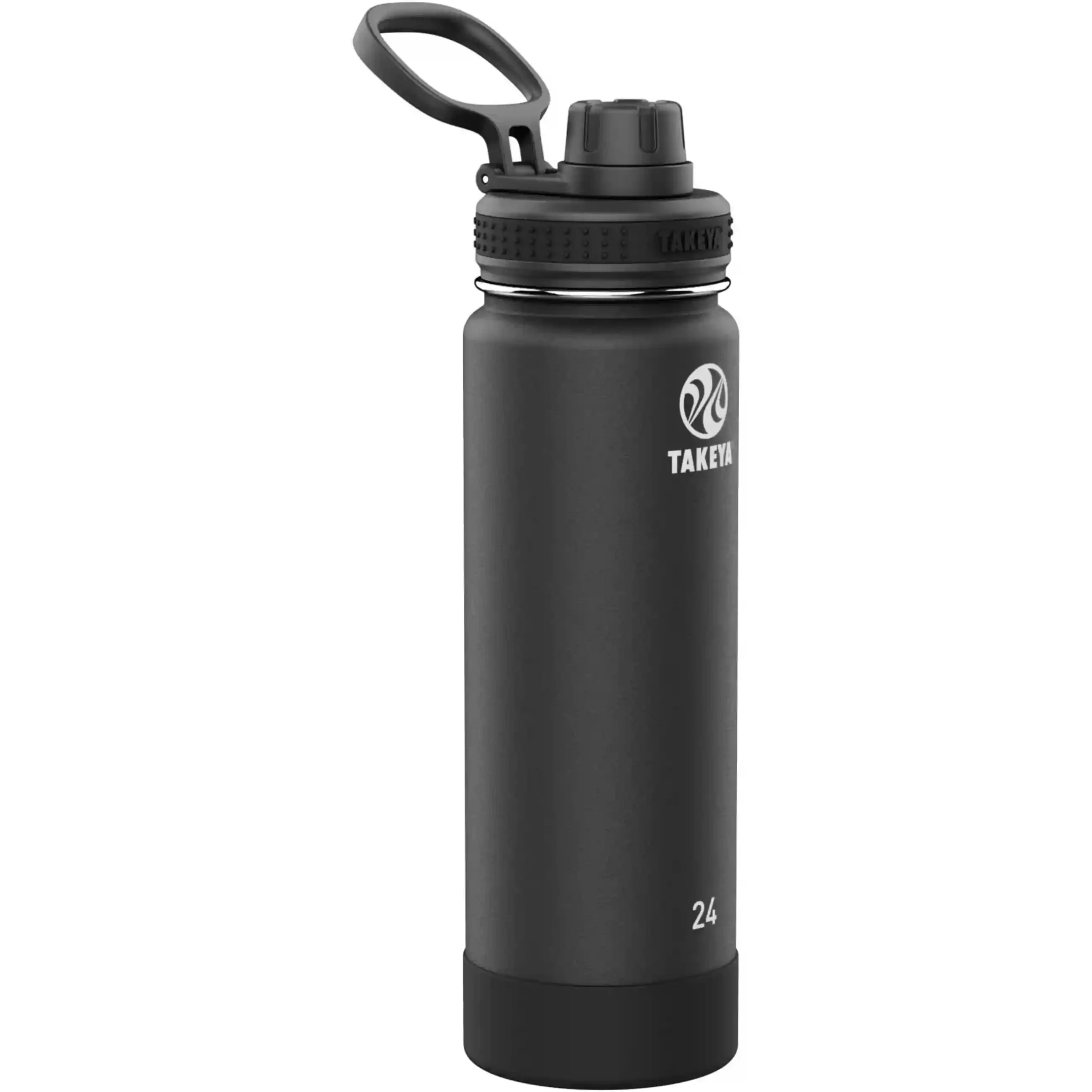
7. Takeya Actives: Best Value Insulated Pick

Takeya Actives

Takeya Actives is the best value performance pick for readers who want good insulation, an easy-drinking spout, and a lower price than many premium insulated bottles.

PROS

  • Strong cold and hot retention

  • Leak-resistant spout lid

  • Protective silicone base

  • More affordable than some premium insulated bottles

CONS

  • Lid has multiple parts that require regular cleaning

  • Taller design may not suit every bag or cup holder

  • Independent safety verification is less documented than the top safety-focused picks

Takeya Actives

The Takeya Actives is a practical choice if you want good insulation and convenient features without moving into the highest price range.

According to Takeya’s official Actives specifications, the bottle uses double wall stainless steel insulation and is rated to keep drinks cold for up to 24 hours and hot for up to 12 hours. It also includes a leakproof Spout Lid, removable protective bumper, and limited lifetime warranty.

The bumper is particularly useful for everyday use because it protects the bottom of the bottle from common dents and scratches. The wide opening also makes adding ice and cleaning easier.

Like YETI, I would position Takeya as a performance and value recommendation, rather than giving it the same independent XRF verification status as the strongest safety focused picks in this guide.

Matching Bottle Material to What You Drink

The best bottle material depends partly on what you put inside it. Plain water is relatively simple, while heat, acidity, and long contact times can change how some materials interact with a drink.

Drink and Bottle Material Guide
Drink Good Choices What to Watch
Plain water Stainless steel, glass, lined aluminum Bottle condition and vacuum seal
Coffee and tea Glass, stainless steel rated for hot drinks Heat, long storage, nickel sensitivity
Lemon water and juice Glass, quality stainless steel Acidity and long contact time
Sports drinks and kombucha Glass, manufacturer approved stainless steel Acidity, coatings, lids, and seals

1. Water: Stainless Steel, Glass, or Lined Aluminum

For everyday water, 18/8 stainless steel and glass are practical choices.

Aluminum bottles can also work, but many rely on an interior lining. Check that the lining is intact and replace the bottle if it starts peeling or showing significant damage.

For insulated stainless steel bottles, also check how the vacuum seal is made and whether the protective base remains intact.

Best habit: Wash the bottle daily and allow it to dry fully instead of repeatedly topping it up without cleaning.

2. Coffee and Tea: Glass or Hot Drink Rated Stainless Steel

You do not need to avoid stainless steel completely for coffee or tea.

Quality stainless steel bottles specifically designed for hot drinks are commonly used for this purpose. However, studies of stainless steel food contact surfaces show that heat, acidity, and longer contact times can increase nickel and chromium migration.

For most users, this does not automatically make stainless steel unsafe. But glass can be a useful alternative if you want minimal material interaction or have a known nickel sensitivity.

Ceramic can also work, but choose modern food contact ceramicware from a reputable manufacturer. The FDA warns that improperly made lead glazed pottery can release lead into food or drinks.

3. Lemon Water, Juice, and Other Acidic Drinks

Acidic drinks deserve a little more attention because low pH can increase metal migration under some conditions.

Research using acidic foods and solutions has found greater nickel and chromium release from stainless steel at lower pH and with longer contact times, although measured amounts vary considerably by alloy and use conditions.

For regular lemon water, juice, kombucha, or similar drinks:

  1. Glass is the simplest choice when minimal material interaction is the priority.
  2. Quality stainless steel can still be appropriate when the manufacturer approves it for that beverage.
  3. Avoid using a bottle with a damaged interior coating or lining.
  4. Clean the bottle soon after use instead of leaving acidic residue inside for long periods.

Quick Beverage Matching Guide

Ask these four questions:

1. What do you drink most?
Plain water: stainless steel or glass
Coffee or tea: glass or hot drink rated stainless steel
Acidic drinks: glass or manufacturer approved stainless steel

2. Do you need insulation?
For cold water, insulated stainless steel is the most practical option.
For hot drinks, choose a bottle specifically rated for hot liquids.

3. Do you have a nickel sensitivity?
Glass may be the simpler choice, particularly for hot or acidic drinks.

4. Is the bottle in good condition?
Replace bottles or components with peeling coatings, damaged liners, cracked seals, or other significant deterioration.

Independent Testing Evidence: What We Know

Safety claims mean more when you know who tested the bottle, what was tested, and what the results actually show.

The brands below do not all have the same type of evidence. Some have published XRF results, some rely on manufacturer disclosures, and others add third party certification or migration testing.

Brand Evidence Comparison
Brand Evidence Available Key Limitation
Hydro Flask Manufacturer disclosure + repeated XRF testing Older bottles used a different sealing process
Owala Manufacturer disclosure + published XRF test Public XRF evidence does not cover every model or batch
Klean Kanteen Manufacturer material and lead-free claims Less published component-level XRF evidence
Pura Stainless Third-party certification + manufacturer disclosure Certification is different from finished-product XRF testing
YETI Manufacturer disclosure + third-party migration testing Lead is used in the enclosed sealing component
Takeya Manufacturer specifications + published independent XRF findings Tested insulated bottles have shown lead in the sealing area

1. Hydro Flask: Strong Independent Testing History

Hydro Flask says it stopped using lead in its vacuum sealing process in 2012 and now uses a lead free alternative.

Independent testing from Lead Safe Mama has also documented lead free results in newer Hydro Flask bottles. Older bottles from before the manufacturing change have tested differently.

Evidence available: Manufacturer disclosure plus repeated independent XRF testing.

What to remember: The age of the bottle matters. Current results should not automatically be applied to much older Hydro Flask products.

2. Owala: Manufacturer Disclosure Plus Published XRF Testing

Owala states that its bottles use lead free solder and that its current stainless steel bottles are lead free.

A published Lead Safe Mama Owala test also reported no detectable lead in the sealing dot or other tested components of that bottle.

This is useful independent evidence, but it should not be described as a decade of testing across every Owala model.

Evidence available: Manufacturer disclosure plus independent XRF testing of a documented bottle.

What to remember: One or several tested examples cannot guarantee every future production batch.

3. Klean Kanteen: Clear Manufacturer Material Information

Current Klean Kanteen product specifications describe multiple stainless steel bottles, including insulated models, as lead free and BPA free.

For this guide, the non insulated Klean Kanteen options remain especially easy to evaluate because they avoid the vacuum sealing component used in double wall bottles.

That does not mean the insulated models should automatically be considered unsafe.

Evidence available: Current manufacturer specifications and material disclosures.

What to remember: Manufacturer claims are useful, but they are not the same type of evidence as publicly documented component level XRF testing.

4. Pura Stainless: Third Party Certification and Material Disclosure

Pura Stainless takes a different approach by combining detailed material information with third party certification.

Pura products and components appear in the MADE SAFE certification program, which evaluates materials against its restricted substance criteria.

Pura also states that current insulated bottles use lead free solder, while its non insulated bottles do not require the same vacuum sealing construction.

Evidence available: Third party certification plus manufacturer material and manufacturing disclosures.

What to remember: Certification and XRF testing answer different questions. Certification evaluates a product against defined standards, while XRF identifies elements present in the specific area tested.

5. YETI: Lead in the Seal, With Migration Testing

YETI openly states that a lead containing sealing material is used in the vacuum insulation process of its Rambler drinkware.

According to YETI, that material is enclosed beneath the exterior base and does not come into contact with the user or beverage. The company also reports third party testing for extractable heavy metals.

Independent testing from Lead Safe Mama has likewise documented lead in the hidden sealing area of tested YETI products.

Evidence available: Manufacturer disclosure, third party migration testing, and independent XRF findings.

What to remember: The relevant distinction is not simply whether lead exists somewhere in the product, but where it is located, whether it remains enclosed, and whether testing shows migration under the tested conditions.

6. Takeya: Lead Has Been Reported in Tested Sealing Dots

Takeya provides material information for its bottles, including stainless steel bodies, plastic lids, and silicone components.

However, published testing from Lead Safe Mama has reported lead containing sealing dots in tested Takeya insulated bottles.

This does not prove that lead is entering the beverage. It does mean the tested construction differs from bottles using a documented lead free vacuum sealing method.

Evidence available: Manufacturer specifications plus published independent XRF findings.

What to remember: Check the exact model and current manufacturing information rather than applying one historical test result to every Takeya bottle.

7. What These Tests Actually Tell You

Different forms of evidence answer different safety questions:

  1. XRF testing identifies elements such as lead or cadmium in the area tested.
  2. Manufacturer disclosure explains materials and manufacturing methods.
  3. Third party certification checks a product against defined safety criteria.
  4. Migration testing looks at whether substances transfer under specific test conditions.

No single method answers everything.

For the clearest picture, look for multiple forms of evidence that agree with each other, and always check the exact bottle model and manufacturing period.

Cleaning and Maintenance for Long Term Safety

water bottle cleaning and maintenance

Even a well made bottle needs regular care. Lids, straws, gaskets, and narrow openings can trap moisture and residue, so cleaning matters just as much as the material you choose.

Daily Cleaning

For everyday use, wash your bottle with warm water, mild dish soap, and a soft bottle brush.

Pay particular attention to:

  1. the bottom and interior walls
  2. threads around the neck
  3. removable gaskets
  4. straws and mouthpieces
  5. hidden areas inside the lid

Remove washable parts when the manufacturer allows it, clean them separately, and let everything dry completely before reassembly or storage.

Hydro Flask recommends regularly removing and cleaning washable lid components, while YETI also recommends separating removable gaskets and straw parts for thorough cleaning.

Deep Cleaning

For stubborn residue, odors, or mineral buildup, follow the cleaning instructions for your exact bottle and lid.

Different materials tolerate different cleaning methods. Some bottles are dishwasher safe, while certain cleaners can damage finishes, coatings, or seals.

For example, YETI advises against bleach and abrasive cleaners, while Hydro Flask recommends avoiding cleaners that contain bleach or chlorine.

Do not boil silicone, plastic, or gasket components unless the manufacturer specifically says they are heat safe.

Check Gaskets, Straws, and Lids

Inspect removable parts regularly for:

  1. cracks or splits
  2. stretching or warping
  3. persistent odors
  4. residue that is difficult to remove
  5. loose or damaged seals

Replace parts that are damaged or no longer fit properly.

Using manufacturer supplied replacement parts is usually the safest option because they are designed for that exact bottle.

Check the Bottom of Insulated Bottles

If you use a vacuum insulated bottle, also inspect the protective bottom cap or cover.

The vacuum sealing material may sit underneath this area. If the bottom cap becomes loose, damaged, or falls off, check the manufacturer’s guidance before continuing to use the bottle.

Do not pry open an intact base simply to inspect the sealing dot.

Choose a Bottle That Is Easy to Clean

Cleanability should be part of your buying decision.

A wide mouth, removable gasket, replaceable straw, and lid that can be properly disassembled make it much easier to reach areas where moisture and residue collect.

Expert Tip: The easiest bottle to maintain is one whose food contact parts can be removed, cleaned, dried, and replaced when worn.

For a full step by step routine, see my guide on how to clean a water bottle.

Good maintenance cannot change what a bottle is made from, but it can help prevent odor, residue buildup, damaged seals, and hygiene problems over time.

FAQs About Water Bottle Safety

Can stainless steel leach metals into water?

Quality 18/8 stainless steel is generally a practical choice for everyday water. Research shows that small amounts of nickel and chromium can migrate from stainless steel under some conditions, particularly with acidic contents, heat, and longer contact times. The amounts vary by alloy and use conditions.

If you have a known nickel sensitivity, glass or an appropriate titanium bottle may be worth considering.

Is BPA-free plastic actually safe?

BPA-free does not mean every material or component has been evaluated in the same way. It tells you specifically about BPA, not necessarily what other polymers, additives, lids, coatings, or seals are used.

The FDA evaluates food contact substances according to their intended use and expected migration.

For reusable plastic bottles, follow the manufacturer’s temperature guidance and replace parts that become badly scratched, cracked, warped, or otherwise damaged.

Do insulated stainless steel bottles contain lead?

Some do and some do not.

The concern is usually the vacuum sealing area at the bottom of the bottle, not the stainless steel drinking chamber itself. Hydro Flask says it stopped using lead in its sealing process in 2012, while Owala states that its bottles use lead-free solder. YETI, by contrast, discloses lead in an enclosed sealing component.

Independent XRF testing can provide additional information about specific bottles, but results should be applied to the tested model and production period, not automatically to every bottle a brand has made.

Is it safe to put coffee or tea in a stainless steel bottle?

Yes, if the manufacturer says that specific bottle is suitable for hot drinks.

Stainless steel can release more nickel and chromium under acidic, heated, or prolonged-contact conditions, but available research does not mean stainless steel is automatically unsafe for coffee or tea.

Glass is a useful alternative if you want minimal material interaction or have a nickel sensitivity.

Also check the exact bottle. For example, Hydro Flask sells Wide Mouth models intended for hot and cold drinks, while Owala specifically says its stainless steel FreeSip should not be used for hot liquids.

What about aluminum water bottles?

Aluminum bottles often use an interior liner or coating between the beverage and bare aluminum.

Rather than limiting aluminum to water only, check:

  • what the interior lining is made from
  • which beverages the manufacturer allows
  • whether the lining is still intact

If the interior starts peeling, flaking, or showing significant damage, follow the manufacturer’s replacement guidance.

Are silicone sleeves and seals safe?

Food contact silicone is commonly used for bottle gaskets, mouthpieces, and seals.

Look for a reputable manufacturer that clearly identifies the silicone as suitable for food contact. Claims such as “platinum cured” can tell you something about the manufacturing process, but they should not be treated as a complete safety guarantee by themselves.

Replace silicone components if they become cracked, permanently stretched, damaged, or difficult to clean.

How often should I replace my bottle's gasket or straw?

There is no universal replacement schedule.

Instead, inspect these components regularly and replace them when you notice:

  • cracks or splits
  • warping or permanent stretching
  • loss of a proper seal
  • persistent odor
  • heavy wear
  • residue that cannot be cleaned

Manufacturer replacement parts are preferable when available because they are designed for that specific bottle.

Can I put my water bottle in the dishwasher?

It depends on the exact bottle and component.

Current manufacturer guidance varies:

  • Hydro Flask lists current Wide Mouth models as dishwasher safe.
  • YETI says Rambler drinkware is dishwasher safe.
  • Takeya lists Actives bottles as dishwasher safe, with some model or finish specific exceptions.
  • Pura says its bottles are top-rack dishwasher safe.
  • Owala says FreeSip lids are top-rack dishwasher safe but recommends hand washing the stainless steel cup to preserve the finish.
  • Purifyou says most dishwashers are suitable for its glass bottles but notes that dishwasher conditions vary.

Conclusion: Your Path to Safer Hydration

Choosing a safer water bottle means looking beyond a “BPA-free” label or stainless steel body. The lid, gasket, straw, coating, vacuum seal, and overall condition of the bottle matter too.

Among the insulated bottles covered in this guide, Hydro Flask has one of the stronger independent testing histories for newer bottles, while Owala combines manufacturer lead-free disclosures with published independent XRF results for tested products.

The most important rule is simple: check the exact model, materials, available testing, and current manufacturer information rather than relying on the brand name alone.

Manufacturing can change over time, so older test results may not always represent the bottle being sold today. Proper cleaning and regular inspection also help keep a well-made bottle in good condition for longer.

If you want a practical place to start, you can check my top overall pick, Hydro Flask Wide Mouth.

Zainab Khursheed!

Hey there, I’m Zainab. I created Water Bottle Experts to make choosing the right water bottle easier, clearer, and less confusing.

My reviews and guides are based on product specifications, manufacturer information, independent testing where available, user feedback, and long-term ownership factors such as material safety, insulation, cleaning, durability, and everyday usability.

I focus on helping readers understand not just which bottle performs well, but also what it is made from, how easy it is to maintain, and whether the available safety claims are properly supported.

Over the years, I’ve researched and compared dozens of water bottles to create practical, evidence-based recommendations for everyday use.

How I Chose These Bottles

This guide is based on a detailed review of manufacturer specifications, material disclosures, independent testing where available, third-party certifications, customer reviews, and long-term user feedback.

I do not personally test every bottle featured on Water Bottle Experts. Instead, I compare multiple sources and look for repeated patterns in material safety, insulation, leakage, cleaning, lid durability, portability, and long-term usability.

For safety-related claims, I look beyond labels such as “BPA-free” or “lead-free” and check available evidence for the bottle body, lid, gasket, straw, coatings, and vacuum-sealing components. Where independent XRF testing or certification is available, I clearly distinguish it from manufacturer claims.

For performance, I compare official insulation ratings with recurring user feedback rather than relying on isolated reviews.

This approach helps highlight bottles that perform well in everyday use while also making their limitations, evidence level, and best-use cases clear.

Related Posts

Leave A Comment