- Home
- Buying Guides
HYDROGEN WATER DRINKWARES
- Size Comparisons
WATER BOTTLE SIZE GUIDES
- Education
Best Water Bottles for Hiking of 2026: Researched and Ranked for Every Trail
Leave a comment / Blog / By Zainab.K / 17 September 2026

CHAPTERS
Quick Answer
The Owala FreeSip 24 oz is the best overall hiking water bottle for most day hikers because it combines easy sip-or-swig drinking, cold-water insulation, a leak-resistant lid, and good everyday usability. However, it is heavier than true backpacking bottles, so it is not the best choice for every type of hike.
For backpacking and ultralight hiking, the Igneous NOBO and CNOC ThruBottle are much lighter and work well with common trail filters. The Hydro Flask Lightweight Trail is a better choice if keeping water cold matters most, while the Katadyn BeFree makes sense if you want a bottle and water filter in one system.
There is no single bottle that wins for every hiker. The best choice depends on trip length, pack weight, weather, water availability, filter compatibility, and how you prefer to drink on the trail.
Imagine reaching for your water bottle during a hot climb and finding that it has leaked inside your backpack. Your clothes are wet, your water supply is lower, and you still have miles ahead.
The wrong bottle can add unnecessary pack weight, leak on the trail, or fail to connect with your water filter. With so many similar options available, choosing the right one can be difficult.
To help you decide, I compared the best water bottles for hiking based on weight, capacity, durability, flow rate, pack fit, and filter compatibility.
Whether you are planning a short day hike or a long backpacking trip, this guide will help you find a bottle that fits your trail and carrying needs.
Quick Picks: Best Water Bottles for Hiking at a Glance
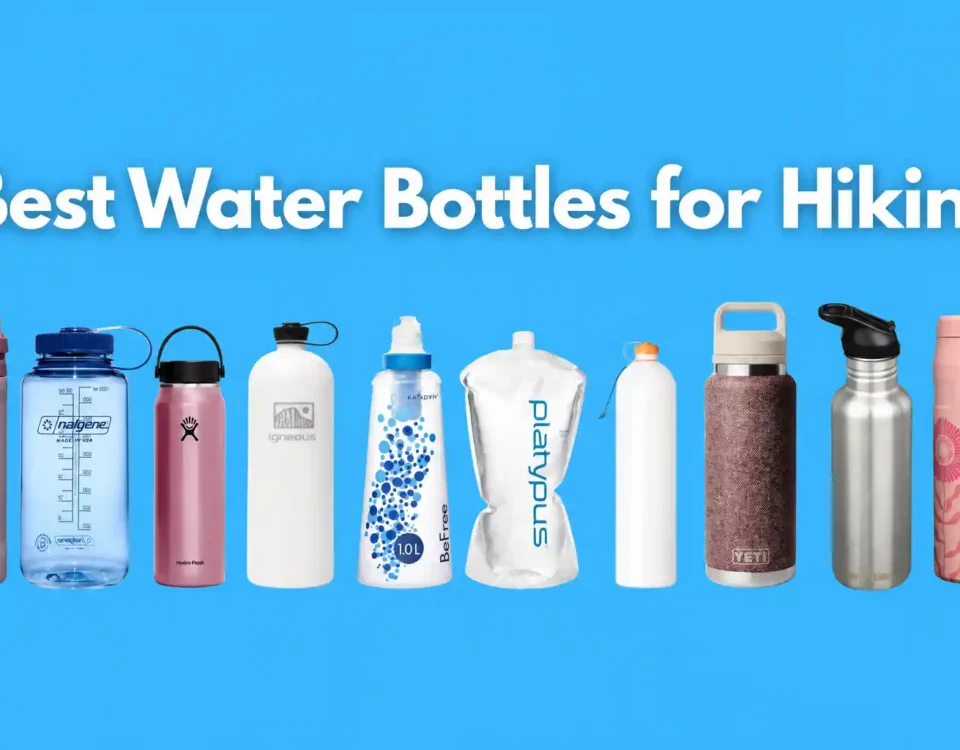
Owala FreeSip | Nalgene Wide Mouth | Hydro Flask | Igneous NOBO | Platypus Platy | Katadyn BeFree | YETI Rambler | CNOC ThruBottle | Klean Kanteen Classic | Stanley IceFlow Flip Straw |
|---|---|---|---|---|---|---|---|---|---|
 |  |  |  |  |  |  |  |  |  |
Best Overall | Best Durable Value | Best Lightweight Insulated | Best Ultralight Hard-Sided | Best Ultralight Soft Bottle | Best Integrated Filter | Best for Car Camping & Hot Hikes | Best for Thru-Hikers | Best Non-Insulated Stainless Steel | Best Easy-Clean Straw Alternative |
Short on time? Here are my top picks based on weight, durability, insulation, filter compatibility, cleaning, and overall trail use.
Best Overall: Owala FreeSip Stainless Steel 24 oz
A practical choice for most day hikers, with insulated stainless steel, a leak-resistant lid, and the option to sip through the built-in straw or tilt the bottle to swig.Best Durable Value: Nalgene Wide Mouth Sustain 32 oz
A lightweight, affordable 1-liter bottle with a simple wide-mouth design that is easy to fill, clean, and use with many backcountry filter setups.Best Lightweight Insulated: Hydro Flask Lightweight Wide Mouth Trail 32 oz
A lighter insulated stainless-steel option for hikers who want cold water without carrying one of the heaviest vacuum bottles.Best Ultralight Hard-Sided: Igneous NOBO 1L
At around 2.3 oz, this reusable HDPE bottle combines very low weight with a 28-410 thread that works directly with common trail filters such as the Sawyer Squeeze.Best Ultralight Soft Bottle: Platypus Platy 2.0L
A 2-liter collapsible bottle that weighs only about 1.3 oz and packs nearly flat when empty, making it especially useful for extra trail or camp water.Best With an Integrated Filter: Katadyn BeFree 1.0L
A lightweight soft flask with a built-in 0.1-micron hollow-fiber filter and fast flow, ideal for hikers who regularly refill from suitable backcountry water sources.Best for Car Camping and Hot Day Hikes: YETI Rambler 36 oz
A rugged, heavily insulated bottle with a large capacity, best when cold water and durability matter more than minimizing pack weight.Best for Thru-Hikers: CNOC ThruBottle 1000
A slim, lightweight 1-liter bottle with a 28 mm threaded neck, designed for long-distance hikers who prioritize pack access and filter compatibility.Best Non-Insulated Stainless Steel: Klean Kanteen Classic 27 oz
A lighter stainless-steel alternative for hikers who prefer a steel bottle but do not need the added weight of vacuum insulation.Best Easy-Clean Straw Bottle Alternative: Stanley IceFlow Flip Straw 2.0 24 oz
An insulated day-hiking bottle with a removable spout, flip straw, carry handle, and cleaning-friendly design, though it is heavier than true backpacking bottles.
Product and Affiliate Transparency: The bottles were not purchased, borrowed, or supplied to WB for personal testing. My rankings are based on independent research and are not determined by any manufacturer.
This article may contain affiliate links. If you purchase through one of these links, I may earn a small commission at no extra cost to you. This does not influence which bottles I include or how I rank them.
How I Researched and Selected These Bottles
I do not claim to have personally tested every bottle in this guide. My recommendations are based on worldwide research, official manufacturer specifications, trusted outdoor publications, material information, and recurring patterns in verified customer feedback.
I also genuinely enjoy travelling and spending time outdoors. Whenever I get some free time and the budget allows , I love travelling to the northern areas of my country. That is one reason I pay close attention to practical details such as bottle weight, portability, pack fit, easy access while walking, and how convenient a bottle would be during a long day outside.
For this guide, I looked at how each bottle is likely to perform across day hikes, hot-weather walks, cold conditions, backpacking trips, and longer trail use.
What I Compared
- Weight and Capacity
I compared each bottle’s empty weight with its capacity to see which options carry more water without adding unnecessary pack weight. - Durability
I reviewed materials, construction, manufacturer information, independent testing, and long-term user feedback. For soft bottles, I also considered folding, squeezing, puncture risk, and wear around the seams. - Leak Resistance
I checked independent testing and recurring user reports for issues involving caps, seals, straw lids, and leaking threads. - Ease of Cleaning
I looked at mouth size, removable lid parts, straw design, dishwasher guidance, and how easy each bottle is to clean and dry properly. - Filter Compatibility
For backpacking bottles, I checked thread sizes and manufacturer guidance to see which options work with popular trail filters such as the Sawyer Squeeze and Platypus QuickDraw. - Material and Construction
I reviewed manufacturer information and credible third-party sources for claims involving BPA-free plastics, HDPE, stainless steel, and recycled materials, rather than relying only on marketing claims. - Price and Overall Value
I compared price with weight, capacity, durability, insulation, filter compatibility, cleaning needs, and expected long-term use.
My goal is not to find one bottle that wins every category. It is to help you understand which bottle makes the most sense for the way you actually hike.
Product Comparison Table
| Product Name | Weight | Capacity | Material | Insulated | Cap / Filter Setup | Estimated Price | Best For |
|---|---|---|---|---|---|---|---|
|
Owala FreeSip Stainless Steel 24 oz
Top Pick |
About 13.4 oz | 24 fl oz 710 ml |
18/8 stainless steel BPA-free lid components |
Yes Triple-layer |
FreeSip lid Straw + swig opening |
Around $30 Estimated | Best Overall Most day hikers who want cold water and easy sip-or-swig drinking |
| Nalgene Wide Mouth Sustain 32 oz | 6.25 oz |
32 fl oz 1 L |
Tritan Renew BPA/BPS-free |
No |
Wide-mouth Screw cap |
Around $17 Estimated | Best Durable Value Hikers who want a simple, affordable and easy-to-clean 1 L bottle |
| Hydro Flask Lightweight Wide Mouth Trail 32 oz | About 12.2 oz |
32 fl oz 946 ml |
18/8 stainless steel |
Yes TempShield |
Wide Mouth Flex Cap |
Around $40–$50 Estimated | Best Lightweight Insulated Hot-weather hikers who want insulation without YETI-level weight |
| Igneous NOBO 1L |
About 2.3 oz 65 g |
32 fl oz 1 L |
HDPE | No |
28-410 thread Sawyer-compatible |
Around $19 Estimated | Best Ultralight Hard-Sided Backpackers who want very low weight and direct trail-filter compatibility |
| Platypus Platy 2.0L |
1.3 oz 36 g |
70 fl oz 2 L |
Nylon / polyethylene film | No |
Polypropylene Screw cap |
Around $20 Estimated | Best Ultralight Soft Bottle Extra trail or camp water capacity that packs nearly flat when empty |
| Katadyn BeFree 1.0L |
About 2.2 oz 63 g |
1 L | BPA/PVC-free soft flask | No |
Integrated 0.1-micron Hollow-fiber filter |
Around $50–$55 Estimated | Best Integrated Filter Hikers who regularly refill from appropriate backcountry water sources |
| YETI Rambler 36 oz |
About 24 oz 1.5 lb |
36 fl oz | 18/8 stainless steel |
Yes Double-wall |
Chug Cap | Around $45–$50 Estimated | Best for Car Camping & Hot Hikes Short hikes where cold water and rugged construction matter more than weight |
| CNOC ThruBottle 1000 |
About 2.2 oz 63 g |
32 oz 1 L |
Reusable HDPE | No |
28 mm thread Filter-compatible |
Around $14 Estimated | Best for Thru-Hikers Long-distance hikers prioritizing weight, pack access and filter compatibility |
| Klean Kanteen Classic 27 oz |
8.4 oz 238 g |
27 fl oz 800 ml |
90% recycled 18/8 stainless steel |
No |
Flip Seal Sport Cap Removable steel straw |
Around $22 Estimated | Best Non-Insulated Stainless Steel Hikers who prefer steel without the extra weight of vacuum insulation |
| Stanley IceFlow Flip Straw 2.0 24 oz |
About 13.4 oz 0.84 lb |
24 fl oz 710 ml |
90% recycled 18/8 stainless steel |
Yes Double-wall |
Flip Straw 2.0 Removable spout |
Around $35 Regular price varies | Best Easy-Clean Straw Alternative Day hikers who prioritize straw drinking, cleaning access and a carry handle |
Weight per Ounce of Capacity Efficiency Score
For ultralight hikers, bottle weight matters. This efficiency score shows how much water a bottle can carry for every ounce of its empty weight.
The formula is simple:
Bottle capacity ÷ empty bottle weight = efficiency score
A higher score means you get more carrying capacity with less bottle weight. However, this score only measures weight efficiency. It does not include insulation, durability, drinking comfort, or ease of cleaning.
| Bottle | Bottle Weight | Capacity | Efficiency Score |
|---|---|---|---|
| Platypus Platy 2.0L | 1.3 oz | 70 fl oz | 53.85 |
| Katadyn BeFree 1.0L |
2.22 oz (63 g) |
33.8 fl oz (1 L) |
15.23 |
| CNOC ThruBottle 1000 |
2.22 oz (63 g) |
32 fl oz (1 L) |
14.41 |
| Igneous NOBO Bottle 1L |
2.3 oz (65 g) |
32 fl oz (1 L) |
13.91 |
| Nalgene Wide Mouth Sustain 32 oz | 6.25 oz | 32 fl oz | 5.12 |
| Klean Kanteen Classic 27 oz | 8.4 oz | 27 fl oz | 3.21 |
| Hydro Flask Lightweight Wide Mouth Trail 32 oz |
12.16 oz (0.76 lb) |
32 fl oz | 2.63 |
| Owala FreeSip Stainless Steel 24 oz | 13.4 oz | 24 fl oz | 1.79 |
| Stanley IceFlow Flip Straw 2.0 24 oz |
13.44 oz (0.84 lb) |
24 fl oz | 1.79 |
| YETI Rambler 36 oz |
24 oz (1.50 lb) |
36 fl oz | 1.50 |
The Platypus Platy 2.0L has the highest score because its soft body weighs only 1.3 oz while holding 70 fl oz. It is excellent for extra water storage, but it does not offer the structure or drinking convenience of a hard bottle.
Among hard sided options, the current CNOC ThruBottle 1000 and Igneous NOBO provide the strongest weight efficiency. Insulated bottles score lower because double wall construction adds weight, but they offer cold retention that ultralight bottles cannot provide.
Choose a high score when reducing pack weight is your priority. Choose a lower scoring insulated bottle when cold water, durability, and drinking comfort matter more.
Top Pick
Owala FreeSip
Based on its drinking design, insulation, leak-resistant lid, broad customer feedback, and everyday usability, the Owala FreeSip 24 oz is my top pick for most day hikers. The biggest reason is simple: you can sip through the straw or tilt the bottle back for a larger drink without changing the lid.
Individual Product Reviews with Pros and Cons
There is no single hiking water bottle that will be perfect for everyone. A day hiker may happily carry a heavier insulated bottle for cold water, while a thru-hiker may care much more about saving every ounce.
Your climate, hiking distance, refill options, backpack space, and preferred drinking style all matter. That is why I have given each bottle a specific “best for” category instead of pretending one product wins in every situation.
Prices below are approximate and can change by retailer, color, availability, and seasonal sales.
1. Owala FreeSip Stainless Steel (24 oz)
Best Overall
Owala FreeSip
Choose the Owala FreeSip if you want a bottle that is easy to drink from while walking, keeps your water cold, and works just as well for everyday use as it does for a day hike. It is not an ultralight backpacking bottle, but for most casual hikers, its convenience is hard to beat.
PROS
-
Sip or swig from one spout
-
Keeps water cold
-
Covered drinking surface
-
Leakproof locking lid
-
Easy to use while walking
CONS
-
Heavy for backpacking
-
More lid parts to clean
-
Not intended for hot drinks
-
Not designed around trail filters
Best for: Day hikers, casual trails, travel, car camping, and anyone who values easy drinking and cold water more than ultralight weight
Key Specs at a Glance
| Feature | Details |
|---|---|
| Capacity | 24 fl oz / 0.7 L |
| Weight | About 13.4 oz |
| Dimensions | About 10.68" H x 3.12" diameter |
| Material | 18/8 stainless steel |
| Cold Retention | Up to 24 hours | Lid | FreeSip straw + swig opening |
| Insulation | Triple-layer vacuum insulation |
| Estimated Price | Around $25–30 |
Owala confirms the triple-layer insulation, leakproof FreeSip lid, 24-hour cold claim, wide opening, and 24 oz size. REI lists the 24 oz bottle at 13.4 oz.
Why It Stands Out
The FreeSip lid is the main attraction. Keep the bottle upright and sip through the built-in straw, or tilt it back and drink through the larger opening.
That makes it easier to drink while walking because you do not have to repeatedly unscrew a cap. The push-button cover also keeps the drinking surface protected when the bottle is sitting in a dusty backpack pocket.
The stainless-steel body is insulated, too. For hot summer day hikes, that can be far more enjoyable than drinking warm water from an uninsulated plastic bottle.
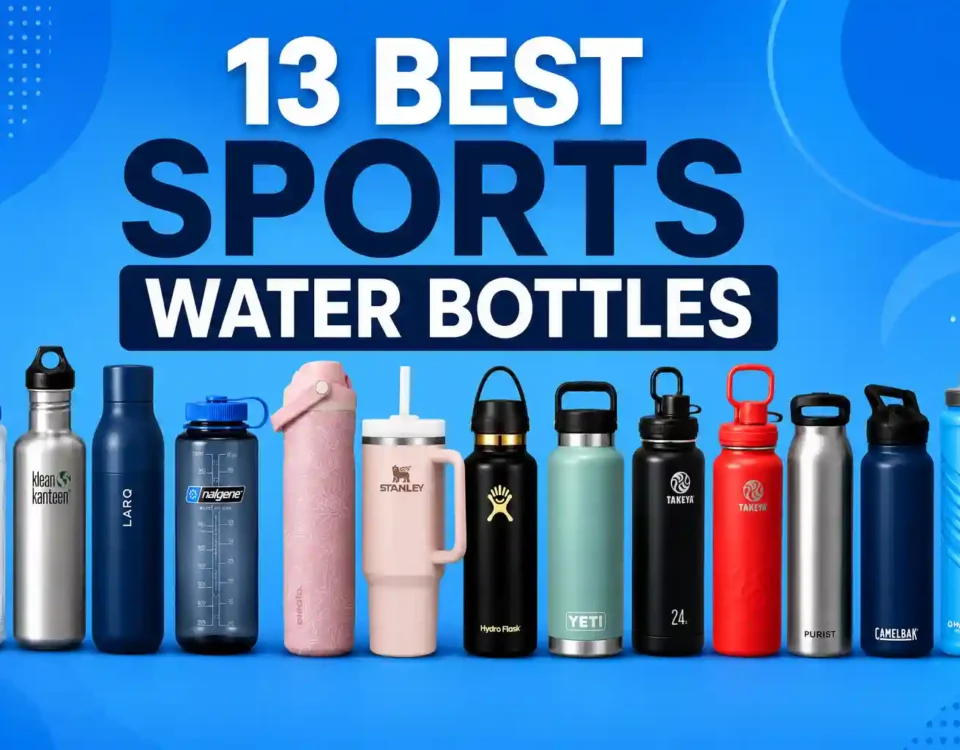
If you also want a bottle for workouts, gym sessions, or other active use, see my guide to the best sports water bottles for more options beyond hiking.

What Do Hikers Say?
Feedback is especially strong for the two-way spout, cold retention, leak resistance, comfortable size, and easy drinking. REI currently shows thousands of reviews and a very high overall rating for the 24 oz FreeSip.
Not every experience is perfect, though. Some owners report damaged lid components or cosmetic wear, so I would not describe it as indestructible.
Drawbacks to Consider
- At about 13.4 oz empty, it is heavy compared with true backpacking bottles.
- A 24 oz capacity may require frequent refills on longer hikes.
- The straw, gasket, and lid need more cleaning than a simple screw-top bottle.
- Owala says the stainless FreeSip should not be used for hot, carbonated, or perishable drinks.
Verdict
For most day hikers, the Owala FreeSip 24 oz offers the best balance of easy drinking, cold retention, and everyday convenience. It is heavier than dedicated backpacking bottles, so I would skip it for long-distance or ultralight trips. But if your priority is cold water and a bottle you can comfortably sip from while walking, this is the one I would choose first.
2. Nalgene Wide Mouth Sustain (32 oz)
Best Durable Value
Nalgene Wide Mouth Sustain
Choose the Nalgene Sustain if you want something simple, inexpensive, lightweight, and easy to clean. It skips insulation, straws, and complicated lids in favor of a tough 1-liter bottle that works well for hiking, camping, and backpacking.
PROS
-
Durable trail-friendly design
-
Lightweight at 6.25 oz
-
Affordable
-
Easy to fill and clean
-
1-liter capacity
CONS
-
No insulation
-
Wide mouth can splash
-
Bulky for some cup holders
-
Simpler than feature-rich bottles
-
Lid strap is a potential weak point
Best for: Day hikers, campers, weekend backpackers, budget-conscious buyers, and hikers who want a simple bottle with very little to go wrong.
Key Specs at a Glance
| Feature | Details |
|---|---|
| Capacity | 32 fl oz / 1 L |
| Weight | 6.25 oz |
| Dimensions | About 8.25" H × 3.5" diameter |
| Material | Tritan Renew |
| BPA/BPS-Free | Yes |
| Insulated | No |
| Estimated Price | Around $17 |
Nalgene confirms the 6.25 oz weight, Tritan Renew construction, dishwasher-safe design and material derived from 50% waste plastic through an ISCC-certified mass-balance process.
Why It Stands Out
The large opening makes the Nalgene very easy to fill, add ice to, measure water in, and clean properly.
It also pairs well with several backpacking water-filter setups, which gives it an advantage over many everyday insulated bottles.
At 6.25 oz, it is considerably lighter than stainless-steel bottles while still giving you the structure and durability of a rigid bottle.
If durability is your biggest priority, you can also compare more rugged options in my guide to the best durable water bottles.

What Do Hikers Say?
Nalgene has unusually consistent outdoor feedback. REI reviewers frequently mention durability, low weight, easy cleaning, and long service life. Independent GearLab testing also praised its affordability, versatility, and lack of noticeable plastic taste.
The most common usability issue is the large drinking opening. It can splash if you try to drink quickly while walking.
Drawbacks to Consider
- No insulation, so water warms relatively quickly in hot weather.
- Wide opening can be messy while moving.
- The 3.5-inch body does not fit many car cup holders.
- The lid-retaining strap is not ideal as a long-term carrying handle.
Verdict
The Nalgene Wide Mouth Sustain is a great choice if you want durability, simplicity, and good value without unnecessary features. It is much lighter than insulated stainless-steel bottles and its 1-liter capacity works well for hiking and camping. Choose it if easy filling, cleaning, and reliability matter more to you than keeping water cold for hours.
3. Hydro Flask Lightweight Wide Mouth Trail (32 oz)
Best Lightweight Insulated Bottle
Hydro Flask
Choose the Hydro Flask Trail if you want a full-size insulated bottle without carrying one of the heaviest stainless-steel options. It makes the most sense for hot-weather hikers who want cold water but still care about reducing pack weight.
PROS
-
Relatively light for insulated steel
-
32 oz capacity
-
Up to 24 hours cold
-
Works with many trail filters
-
Slimmer trail-oriented design
CONS
-
Heavier than plastic
-
Premium price
-
Can dent more easily
-
Too heavy for many ultralight hikers
-
Bottle is hand-wash recommended
Best for: Hot-weather day hikers and overnight hikers who want cold water without carrying the heaviest insulated bottle available.
Key Specs at a Glance
| Feature | Details |
|---|---|
| Capacity | 32 fl oz / 946 ml |
| Weight | About 12.2 oz |
| Height | About 11.8" |
| Diameter | About 3.2" |
| Material | Stainless steel |
| Insulation | TempShield double-wall vacuum |
| Cold Retention | Up to 24 hours |
| Hot Retention | Up to 12 hours |
| Estimated Price | Around $40–50 |
Hydro Flask lists the 32 oz Trail at about 0.34 kg/0.76 lb and says it is approximately 25% lighter than its other 32 oz Wide Mouth bottles. It is also rated for up to 24 hours cold and 12 hours hot.
Why It Stands Out
The biggest advantage is the weight-to-insulation balance.
You still get 32 oz of capacity and proper vacuum insulation, but without the roughly 1.5 lb empty weight of something like a 36 oz YETI.
Hydro Flask also says the bottle fits most backcountry water filters, making it more hiking-focused than many insulated alternatives.

What Does User Feedback Show?
Owners regularly praise the lighter weight, slimmer shape, and temperature retention.
However, an important pattern also appears in REI feedback: because the Trail version uses thinner construction to save weight, it can dent more easily than standard Hydro Flask bottles.
Independent GearLab testing similarly liked its simplicity, low weight for an insulated bottle, and easy cleaning.
Drawbacks to Consider
- Still roughly twice the weight of a Nalgene.
- More expensive than plastic bottles.
- Thin walls can show dents more easily.
- Hydro Flask recommends hand washing the bottle.
Verdict
The Hydro Flask Trail makes the most sense for hikers who want insulation without carrying an especially heavy stainless-steel bottle. You still pay a weight and price premium compared with plastic, but cold water can make that trade-off worthwhile on hot-weather hikes. If insulation is high on your priority list, this is one of the better hiking-focused options.
4. Igneous NOBO Bottle (1L)
Best Ultralight Hard-Sided Bottle
Igneous NOBO
Choose the NOBO if you like the weight and slim shape of disposable trail bottles but want something designed for repeated use. It is especially useful if your hiking setup already includes a Sawyer Squeeze or another compatible 28-410 filter.
PROS
-
About 2.3 oz
-
Compatible with common filters
-
Slim backpack-friendly shape
-
Squeezable body
-
Designed for repeated use
CONS
-
No insulation
-
Narrow mouth
-
Harder to deep clean
-
Few comfort features
-
Costs more than disposable bottles
Best for: Ultralight backpackers and thru-hikers using Sawyer, Platypus QuickDraw, or other compatible 28 mm filtration systems.
Key Specs at a Glance
| Feature | Details |
|---|---|
| Capacity | 1 L |
| Weight | About 2.3 oz / 65 g |
| Dimensions | About 9.45" H × 3.2" diameter |
| Material | HDPE |
| Thread | 28-410 |
| Insulated | No |
| Estimated Price | Around $19 |
Igneous currently lists a 1-liter capacity, approximately 65 g weight, HDPE body, 28-410 threading, and compatibility with common filters such as the Sawyer Squeeze.
Why It Stands Out
At only around 2.3 oz, the NOBO cuts several ounces compared with a Nalgene while still behaving more like a normal bottle than a floppy reservoir.
Its narrow profile slides easily into backpack pockets, and compatible filters can screw directly onto the bottle.
The body is also squeezable, which is useful when pushing water through a filter.

What Does Trail Testing Show?
Independent CleverHiker testing found the NOBO very lightweight, surprisingly durable, easy to pack, and convenient with trail filters. Their bottle survived repeated drop testing with mainly cosmetic marks.
The trade-off was cleaning: the narrow opening is harder to scrub and less convenient for ice or hydration tablets.
Drawbacks to Consider
- No insulation.
- Narrow opening is harder to clean.
- More difficult to add ice or large hydration tablets.
- Minimalist design offers few everyday convenience features.
Verdict
The NOBO is one of the more interesting choices for ultralight hikers who still prefer a rigid bottle over a soft flask. Its very low weight, slim shape, and direct compatibility with common trail filters make it especially practical for backpacking. Choose it if trail efficiency matters more than insulation, ice, or everyday bottle features.
5. Platypus Platy 2.0L
Best Ultralight Soft Bottle
Platypus Platy
Choose the Platy when you need extra water capacity without carrying a bulky empty bottle all day. It weighs almost nothing for its 2-liter capacity and folds down when you no longer need the extra water.
PROS
-
Only 1.3 oz
-
2-liter capacity
-
Packs nearly flat
-
Excellent capacity-to-weight ratio
-
Useful secondary reservoir
CONS
-
Awkward for on-the-move drinking
-
Soft body needs careful packing
-
Less stable than rigid bottles
-
No insulation
-
Not ideal as your only bottle
Best for: Thru-hikers, backpackers, dry camping, and anyone who wants lightweight backup water capacity.
Key Specs at a Glance
| Feature | Details |
|---|---|
| Capacity | 2 L / 70 fl oz |
| Weight | 1.3 oz / 36 g |
| Dimensions | 13.8" x 7.5" |
| Material | Nylon/polyethylene film |
| Insulated | No |
| Estimated Price | Around $20 |
Platypus confirms the 2-liter capacity, exceptionally low 1.3 oz weight, flexible film construction, and current pricing around the $20 level.
Why It Stands Out
Few water carriers offer this much capacity for so little weight.
It works particularly well for dry camps, long water carries, cooking, and extra storage. When empty, it takes up very little pack space.
That makes it a useful second bottle even if you prefer drinking from a rigid bottle while hiking.

What Do Backpackers Say?
Backpacking Light community feedback continues to rate the Platy highly for weight efficiency and packability, especially as a lightweight secondary reservoir.
Its weakness is convenience rather than capacity. A soft bottle is simply more awkward to handle while walking.
Drawbacks to Consider
- Harder to drink from while moving.
- Soft body needs more care around sharp objects.
- Less stable when standing partly empty.
- No insulation.
Verdict
The Platypus Platy 2.0L works best as extra water storage rather than your main drinking bottle. Its combination of 2-liter capacity, extremely low weight, and pack-flat design is hard to beat for dry camps and long water carries. I would pair it with a rigid bottle instead of relying on it alone for drinking while hiking.
6. Katadyn BeFree Water Filtration System (1.0L)
Best With an Integrated Filter
Katadyn BeFree
Choose the BeFree if you regularly collect water from backcountry sources and want your filter and drinking bottle combined into one lightweight system. It saves space, filters quickly, and is much simpler than carrying a pump-style filter.
PROS
-
Bottle + filter in one
-
Extremely lightweight
-
Fast filtration
-
Packs small
-
Easy field cleaning
CONS
-
Limited 1 L capacity
-
Flow can decline
-
Soft flask needs more care
-
No insulation
-
Not a virus purifier
Best for: Fast-and-light hikers, trail runners, and backpackers who frequently refill from appropriate backcountry water sources.
Key Specs at a Glance
| Feature | Details |
|---|---|
| Capacity | 1 L |
| Weight | About 2.2 oz / 63 g |
| Filter | 0.1-micron hollow fiber |
| Flow Rate | Up to 2 L/min |
| Filter Capacity | Up to 1,000 L, depending on water quality |
| Removes | Bacteria, cysts and sediment |
| Insulated | No |
| Estimated Price | Around $50–55 |
Katadyn currently lists the standard U.S. BeFree 1.0L at 63 g with a 0.1-micron filter, up to 2 L/min flow, and a rated capacity of up to 1,000 liters depending on water quality.
Why It Stands Out
You do not need to carry a separate bottle and filtration unit.
Fill the flexible flask, attach the filter, and drink or squeeze filtered water directly through it.
The flask also compresses as it empties, so it takes up less space than a rigid 1-liter bottle.

What Does Outdoor Feedback Show?
Independent reviews consistently praise the BeFree for its fast initial flow rate, very low weight, simple operation, and easy field cleaning.
The main concern is long-term flow. Dirty or silty water can clog hollow-fiber filters faster, so source selection and regular cleaning matter.
Drawbacks to Consider
- Flow can slow as the filter collects sediment.
- Soft flask is less rugged than a hard bottle.
- One liter may not be enough for long dry stretches.
- It filters bacteria and protozoa but is not rated as a virus purifier.
Verdict
The Katadyn BeFree is a smart choice when access to backcountry water matters more than insulation or a rigid bottle body. You get a lightweight bottle and filtration system together, which can simplify your setup considerably. It is especially well suited to fast-and-light hikers who regularly refill from suitable natural water sources.
7. YETI Rambler 36 oz
Best for Car Camping and Hot Day Hikes
YETI Rambler
Choose the YETI Rambler when cold water, large capacity, and rugged construction matter much more than pack weight. It is overkill for most backpacking trips, but for car camping, climbing days, or short exposed hikes, that extra weight is easier to justify.
PROS
-
Strong insulation
-
Large 36 oz capacity
-
Rugged stainless build
-
Leakproof
-
Easy-to-use Chug Cap
CONS
-
Very heavy
-
Premium price
-
Poor choice for backpacking
-
Often too large for cup holders
-
Bulky in a hiking pack
Best for: Car camping, climbing areas, short hot-weather hikes, and people who prioritize cold water and durability over carrying weight.
Key Specs at a Glance
| Feature | Details |
|---|---|
| Capacity | 36 fl oz |
| Empty Weight | About 1.5 lb / 24 oz |
| Dimensions | About 11.6" H × 3.8" W |
| Material | 18/8 stainless steel |
| Insulation | Double-wall vacuum |
| Cap | Chug Cap |
| Warranty | 5 years |
| Estimated Price | Around $45–50 |
YETI currently lists the standard 36 oz Rambler at around $50 with a 1.5 lb empty weight, double-wall insulation, dishwasher-safe construction, and a five-year warranty.
Why It Stands Out
The Rambler focuses on durability and insulation rather than weight savings.
The Chug Cap gives you a smaller drinking opening, while removing it exposes the wide bottle mouth for adding ice and cleaning.
The 36 oz capacity also means fewer refills on hot day hikes.

What Does Outdoor Testing Show?
Independent CleverHiker testing praised the Rambler for excellent insulation, durability, leak resistance, and easy ice filling.
Weight was also its biggest weakness. It was one of the heaviest bottles in their testing.
Drawbacks to Consider
- Around 24 oz before you add any water.
- Premium price.
- Too heavy for most backpacking.
- YETI says many Rambler bottles are too large for standard cup holders.
Verdict
The YETI Rambler 36 oz is excellent at keeping a large amount of water cold, but its weight makes it a specialized hiking choice. I would choose it for car camping, short day hikes, or very hot conditions rather than backpacking. If you are happy to carry extra weight for rugged construction and insulation, the Rambler makes much more sense.
8. CNOC ThruBottle 1000
Best for Thru-Hikers
CNOC ThruBottle
Choose the ThruBottle 1000 if you want the slim shape and filter compatibility that make disposable bottles popular with thru-hikers, but in a bottle designed to be reused. The newer generation is significantly lighter than the original version.
PROS
-
Around 2.2 oz
-
28 mm filter compatibility
-
Slim side-pocket shape
-
Squeezable
-
Reusable HDPE
CONS
-
No insulation
-
Narrow opening
-
Harder to add ice
-
Minimal everyday features
-
Disposable bottles can still weigh less
Best for: Thru-hikers and long-distance backpackers who want an ultralight, filter-compatible bottle designed for repeated trail use.
Key Specs at a Glance
| Feature | Details |
|---|---|
| Capacity | 1 L / 32 oz |
| Weight | About 2.2 oz / 63 g |
| Material | HDPE |
| Neck | 28 mm |
| Filter Compatibility | Common 28 mm filters |
| Insulated | No |
| Estimated Price | Around $14 |
The current ThruBottle 1000 is about 63 g, uses reusable HDPE, and has a 28 mm threaded neck. CNOC also confirms the HDPE is BPA-, BPS-, BPF-, and phthalate-free.
Why It Stands Out
This bottle is designed specifically around how long-distance hikers actually carry water.
Its tall, narrow shape works well in backpack side pockets, while the squeezable body makes it easier to push water through compatible filters.
Embossed measurement markings and a pull tag are small details, but they become useful when you use a bottle every day on a long trail.

What Does Trail Testing Show?
Recent thru-hike testing praised the second-generation model for its 63 g weight, slim shape, squeezability, 28 mm filter thread, and practical pack access.
CleverHiker also found it extremely packable and easy to drink from while moving, although the narrow mouth makes ice and hydration tablets harder to add.
Drawbacks to Consider
- No insulation.
- Narrow mouth is harder to clean.
- Difficult to add large ice cubes or tablets.
- Still slightly heavier than reusing a disposable bottle.
Verdict
The CNOC ThruBottle 1000 is designed for hikers who care about every ounce and regularly use compatible trail filters. Its narrow, lightweight design works particularly well for thru-hiking and long-distance backpacking. Choose it over a traditional bottle if low weight, easy pack access, and filter compatibility are more important than insulation or a wide mouth.
9. Klean Kanteen Classic (27 oz)
Best Non-Insulated Stainless Steel
Klean Kanteen Classic
Choose the Klean Kanteen Classic if you prefer stainless steel but do not need vacuum insulation. It gives you a lighter steel bottle with a practical sport cap, removable stainless straw, and less concern about flavors lingering in the bottle.
PROS
-
Lightweight for stainless steel
-
90% recycled stainless steel
-
Leakproof sport cap
-
Resists flavor retention
-
Cup-holder-friendly profile
CONS
-
No insulation
-
Heavier than plastic
-
Straw feedback is mixed
-
More parts to clean
-
Smaller than 1-liter hiking bottles
Best for: Hikers who prefer stainless steel but do not want the weight of a fully insulated bottle.
Key Specs at a Glance
| Feature | Details |
|---|---|
| Capacity | 27 fl oz / 800 ml |
| Weight | 8.4 oz |
| Dimensions | 10.75" H × 3.41" W |
| Opening | 1.75" |
| Material | 90% post-consumer recycled 18/8 stainless steel |
| Lid | Flip Seal Sport Cap + removable steel straw |
| Insulated | No |
| Estimated Price | Around $22 |
Klean Kanteen confirms the 8.4 oz weight, 27 oz capacity, single-wall design, 90% post-consumer recycled stainless steel, and leakproof Flip Seal Sport Cap.
Why It Stands Out
At 8.4 oz, this bottle sits between lightweight plastic and heavier vacuum-insulated steel.
The sport lid can be used with or without its removable stainless-steel straw, giving you more drinking flexibility than a basic screw cap.
Klean Kanteen also states that the steel does not retain or impart flavors.

What Does User Feedback Show?
Feedback is more mixed than with Nalgene or Owala.
Owners commonly like the lightweight body, narrow profile, dishwasher-safe construction, and stainless straw, but some REI reviewers report that the straw can require more suction than expected or leave a small amount of water at the bottom.
That is worth knowing before buying specifically for the straw.
Drawbacks to Consider
- No insulation.
- Heavier than plastic bottles.
- Smaller opening is less convenient for some filters.
- Straw mechanism needs regular cleaning.
- Straw performance receives mixed feedback.
Verdict
The Klean Kanteen Classic is a good middle-ground option for hikers who prefer stainless steel but do not need insulation. It is lighter than most vacuum bottles while giving you a durable steel body and flexible drinking options. Choose it if you want to avoid plastic without carrying the extra weight of a full insulated bottle.
10. Stanley IceFlow Flip Straw 2.0 (24 oz)
Best Easy-Clean Straw Bottle Alternative
Stanley IceFlow Flip Straw
Choose the Stanley IceFlow if you want an insulated straw bottle with a strong carry handle and a lid that is easier to deep clean than many fixed-spout designs. It works better for day hikes and trailhead use than weight-focused backpacking.
PROS
-
Easy flip-straw drinking
-
Removable spout
-
Good cold retention
-
Comfortable handle
-
Cup-holder-friendly
CONS
-
Heavy compared with trail bottles
-
Only 24 oz
-
Regular price is not especially budget
-
Straw needs maintenance
-
Not for ultralight hiking
Best for: Day hikers who want an insulated straw bottle, removable cleaning parts, and a comfortable carry handle.
Key Specs at a Glance
| Feature | Details |
|---|---|
| Capacity | 24 fl oz |
| Weight | About 13.4 oz |
| Dimensions | About 10.04" H x 3.74" x 3.34" |
| Material | Recycled 18/8 stainless steel |
| Insulation | AeroLight double-wall vacuum |
| Cold Retention | |
| Insulation | AeroLight double-wall vacuum |
| Iced | Up to 2 days |
| Lid | Flip Straw 2.0 |
| Estimated Price | Around $20–35 depending on sale/color2 |
Stanley currently lists the 24 oz IceFlow at 0.84 lb, with up to 10 hours of cold retention and up to 2 days iced. The regular price is around $35, although some variants have recently appeared around $21 during sales.
Why It Stands Out
Stanley’s AeroLight construction is designed to reduce stainless-steel weight, although at around 13.4 oz this is still a heavy bottle compared with real backpacking options.
The more useful feature for many people is the removable spout. Straw lids can collect residue in small spaces, so being able to remove that component makes a genuine difference during deeper cleaning.
The folding handle and cup-holder-friendly shape also work well for the drive to the trailhead.

What Does Buyer Feedback Show?
Large-scale customer feedback is generally strong for cold retention, easy straw drinking, portability, and the carry handle. Some users also specifically praise the straw flow.
The main thing to understand is that “lightweight” here means lighter relative to traditional stainless-steel bottles—not lighter than Nalgene, NOBO, or CNOC.
Drawbacks to Consider
- About 13.4 oz empty.
- Only 24 oz of capacity.
- Straw still needs regular cleaning.
- Regular pricing can be higher than the Owala FreeSip.
- Not appropriate for ultralight backpacking.
Verdict
The Stanley IceFlow 24 oz is better suited to casual day hikes than weight-focused backpacking. Its easy straw drinking, removable spout, insulation, and comfortable handle make it convenient, but it is still fairly heavy for its 24 oz capacity. Consider it if cleaning convenience and cold water matter more to you than minimizing pack weight.
Trip-Type Recommendation Matrix
| Bottle | Hot Desert Day Hike | Cold Alpine Trip | Multi-Day Thru-Hike | Ultralight Fast-Packing | Car Camping | Backcountry Filtering |
|---|---|---|---|---|---|---|
| Nalgene Wide Mouth Sustain | Good | Good | Excellent | Fair | Good | Excellent (wide mouth) |
| Hydro Flask Lightweight Trail | Excellent | Excellent | Fair | Poor | Good | Good (fits most filters) |
| Igneous NOBO (1L) | Fair | Good | Excellent | Excellent | Fair | Excellent (Sawyer direct) |
| Platypus Platy 2.0L | Fair | Good | Excellent (camp water) | Excellent | Fair | Good (with accessories) |
| Owala FreeSip Stainless | Good | Good | Poor | Poor | Good | Fair (narrow spout) |
| Katadyn BeFree 1.0L | Good | Good | Good | Excellent | Fair | Excellent (integrated filter) |
| YETI Rambler (36 oz) | Excellent | Excellent | Poor | Poor | Excellent | Good (wide mouth) |
| Cnoc Outdoors ThruBottle | Fair | Good | Excellent | Excellent | Fair | Good (28mm neck) |
| Klean Kanteen Classic | Fair | Good | Fair | Poor | Good | Fair (1.75" opening) |
| Stanley IceFlow (24 oz) | Good | Good | Poor | Poor | Good | Fair (straw lid) |
How to Choose a Hiking Water Bottle: Buyer’s Guide

The right hiking bottle depends on how and where you hike. Instead of looking for one “perfect” bottle, choose based on your weight limit, weather, water access, and drinking style.
Quick Rule
- Want the lightest option? → Plastic or soft flask
- Want cold water? → Insulated stainless steel
- Need extra water capacity? → Collapsible bottle
- Use a trail filter? → 28 mm or filter-friendly bottle
- Drink while walking? → Straw or chug lid
If keeping pack weight as low as possible is your main priority, my guide to the best lightweight water bottles compares more low-weight options for travel, hiking, and everyday use.
~ Choose the Right Bottle Material
1. Plastic Bottles
Best for: Backpacking, budget hiking, and low pack weight.
- Lightweight
- Usually affordable
- Durable for their weight
- Easy to see how much water is left
- Many work well with trail filters
- Tritan Renew options use recycled-content material
- No insulation
- Flavored drinks may leave odors if not cleaned properly
Good examples: Nalgene Sustain and Igneous NOBO
Choose Plastic If:
You care more about low weight, simplicity, and price than keeping water cold.
2. Stainless Steel
Best for: Hot-weather hikes, day hikes, and people who prefer cold water.
- Strong and long-lasting
- Does not easily hold drink flavors
- Available insulated or non-insulated
- Insulated models keep water cold much longer
- Usually heavier than plastic
- Often more expensive
- Recycled stainless-steel options are available
Good examples: Hydro Flask Trail, YETI Rambler, Klean Kanteen Classic, Stanley IceFlow
Choose Stainless Steel If:
You are happy carrying extra weight in exchange for cold water and a steel body.
3. Soft and Collapsible Bottles
Best for: Thru-hiking, extra water storage, and dry trail sections.
- Extremely light
- Excellent capacity-to-weight ratio
- Packs nearly flat when empty
- Useful as backup water storage
- Some include integrated filters
- Less rigid and harder to handle while walking
- Need more care around sharp objects
Good examples: Platypus Platy and Katadyn BeFree
Choose a Soft Bottle If:
You need extra capacity without carrying extra bottle weight all day.
~ Decide Whether You Really Need Insulation
Insulated bottles are useful for hot-weather hikes, short day trips, and hikers who really value cold water, but the extra insulation also adds weight.
For backpacking, thru-hiking, or routes with frequent refill points, a lightweight non-insulated bottle often makes more sense.
For a full weight and temperature-control comparison, see the Insulated vs. Non-Insulated Hiking Water Bottles section below.
Expert Tip
Do not pay extra for insulation just because it sounds better. If you mostly hike in cool weather, a lightweight plastic bottle can be more practical.
~ Pick the Right Capacity
Your ideal capacity depends more on water availability and weather than on hike length alone.
| Trip Type | Useful Carrying Capacity |
|---|---|
| Short/day hike | About 1–2 L |
| Overnight backpacking | Around 2–3 L |
| Long dry sections | Around 3–6 L total capacity |
These are only planning ranges. Hot weather, difficult terrain, and limited refill points may increase your needs.
Before Choosing Capacity, Check:
- How long is the route?
- How hot will it be?
- Are reliable water sources available?
- Will you carry a filter?
- What is the longest dry section?
Weight Check
1 liter of water weighs about 2.2 lb / 1 kg.
Carrying more water than you need can quickly become heavier than the rest of your bottle setup.
~ Choose a Lid That Matches How You Drink
1. Wide-Mouth Cap
Best for: Filling, cleaning, ice, and filters.
- Easy to refill
- Easy to clean
- Works well with bottle brushes
- Useful around many filter setups
- Can splash while drinking on the move
Example: Nalgene Wide Mouth
2. Straw Lid
Best for: Drinking while walking.
- No need to tilt the bottle
- Convenient for quick sips
- Easy to use one-handed
- More parts to clean
- Usually poor for direct filter attachment
Examples: Owala FreeSip and Stanley IceFlow
3. Chug Cap
Best for: Controlled drinking without a straw.
- Smaller drinking opening
- Easier to use while moving
- Often sits over a wider bottle opening
- More parts than a basic screw cap
Example: YETI Rambler
4. Sport / Push-Pull Cap
Best for: Simple one-handed use.
- Lightweight
- Fast to open
- Simple design
- Can leak if not fully closed
- Usually has slower flow
~ Check Filter Compatibility Before Buying
Not all “filter-compatible” bottles work the same way.
Important Difference:
Direct-thread compatible means the filter screws onto the bottle.
Filter-friendly may simply mean the opening is easy to fill from a filter.
| Bottle | Filter Compatibility |
|---|---|
| Igneous NOBO | Direct 28-410 thread |
| CNOC ThruBottle | Direct 28 mm thread |
| Katadyn BeFree | Filter built into the system |
| Nalgene Wide Mouth | Works with many filter setups |
| Hydro Flask Trail | Wide opening works with many filters |
| YETI Rambler | Easy to fill from filtered output |
| Owala FreeSip | Limited direct compatibility |
| Klean Kanteen Classic | Check filter or adapter |
| Stanley IceFlow | Not designed for direct filter use |
Best Choices for Filter Users
- Sawyer-style filter setup: NOBO or CNOC
- Integrated system: Katadyn BeFree
- Wide opening for filtered water: Nalgene or Hydro Flask
Expert Tip
Check the thread size of your filter before buying. A wide opening and a direct screw-on connection are not the same thing.
~Check Backpack Pocket Fit
Bottle diameter matters more than many people expect.
1. Easier to Fit
- CNOC ThruBottle
- Igneous NOBO
- Other slim 1-liter bottles
2. Usually Fits Many Hiking Packs
- Nalgene 32 oz
- Hydro Flask Trail 32 oz
3. Check Carefully Before Buying
- Owala FreeSip
- Large YETI bottles
- Other wide insulated bottles
4. Soft Bottles
Soft flasks can be easier to pack because they change shape as the water level drops.
Before Buying
Measure your backpack side pocket if it is narrow. A great bottle becomes annoying very quickly if you have to fight with the pocket every time you want a drink.
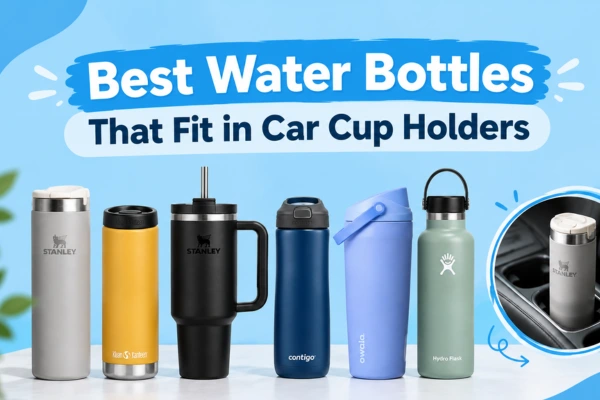
~ Do You Need Cup-Holder Compatibility?
This matters more for day hikers who drive to trailheads than for backpackers.
- Slim bottles are usually easier to fit
- Stanley IceFlow is designed with cup-holder use in mind
- CNOC and NOBO have narrow profiles
- Nalgene may be too wide for smaller holders
- Larger YETI bottles may also be too wide
Car cup holders vary, so always compare the bottle diameter with your vehicle.
Quick Hiking Bottle Checklist
Before buying, ask yourself:
- Do I want low weight or cold water?
- How much water do I need between refill points?
- Will I use a trail filter?
- Do I need direct 28 mm compatibility?
- Do I prefer a straw, chug, or wide mouth?
- Can I clean the lid easily?
- Will it fit my backpack pocket?
- Is insulation really worth the extra weight for my hikes?
Insulated vs. Non-Insulated Hiking Water Bottles: Which Should You Choose?
The choice is simpler than it looks:
Insulation = better temperature control + more bottle weight.
The real question is not whether insulation is useful. It is whether keeping your water cold or warm is worth carrying the extra weight on your particular hike.
Quick Decision Guide
| Choose Insulated If... | Choose Non-Insulated If... |
|---|---|
| You hike in hot, exposed weather | You are backpacking long distances |
| Cold water matters to you | Low pack weight is a priority |
| You mostly take short day hikes | You refill frequently on trail |
| You go car camping | You hike mostly in cool weather |
| You want better temperature control | You want the lowest-cost option |
1. What Do You Gain With an Insulated Bottle?
An insulated bottle gives you one major benefit: temperature control.
It is a good choice when you want:
- Cold water during hot summer hikes
- Warm drinks during cold-weather stops
- Less condensation on the outside of the bottle
- A stainless-steel interior that generally resists lingering flavors and odors
- One bottle for hiking and everyday use
The downside is weight. Double-wall construction requires more material, so even lightweight insulated bottles are normally much heavier than simple plastic trail bottles.
2. When Is Insulation Worth Carrying?
Choose an Insulated Bottle For:
- Hot and exposed day hikes
Cold water can make a long, sunny hike much more comfortable, especially when there is little shade. - Short trips
On a two- or three-hour hike, carrying a few extra ounces may matter much less than it would over several days. - Car camping and trailhead activities
When you are not carrying everything for miles, there is little reason to sacrifice temperature control just to save bottle weight. - Cold-weather hiking
Vacuum insulation can help slow down freezing, and an insulated bottle can also carry a warm drink.
It will not make water freeze-proof, though. REI also recommends keeping bottles inside your pack or using insulated sleeves in very cold conditions.
3. When Should You Skip Insulation?
Choose a Non-Insulated Bottle For:
- Thru-hiking and multi-day backpacking
A few extra ounces may not sound important at home, but you carry that weight over every mile. - Ultralight and fast-and-light trips
A bottle weighing 2–6 oz makes much more sense when reducing base weight is a major goal. - Cool alpine routes with frequent water access
If you regularly refill with cool water, carrying heavy insulation may solve a problem you do not really have. - Budget setups
Simple plastic bottles usually cost less while still doing the main job: carrying water reliably.
4. See the Weight Difference in Real Numbers
This is where the trade-off becomes much easier to understand.
Capacity Efficiency = Bottle Capacity ÷ Empty Bottle Weight
| Bottle | Capacity | Empty Weight | Capacity per 1 oz of Bottle Weight |
|---|---|---|---|
| Igneous NOBO | 32 oz / 1 L | ~2.3 oz | ~13.9 oz |
| YETI Rambler | 36 oz | ~24 oz | 1.5 oz |
The NOBO can carry roughly 9 times as much water capacity per ounce of empty bottle weight as the YETI.
That does not make the NOBO a better bottle overall.
It simply shows how different their priorities are:
- NOBO: minimize pack weight
- YETI: maximize insulation and durability
The NOBO’s current manufacturer specification is about 65 g for a 1-liter bottle, while YETI lists the 36 oz Rambler at 1.5 lb empty.
So, Which One Should You Choose?
- For Day Hiking:
- Go insulated if cold water improves your hike and the extra weight does not bother you.
- For Backpacking:
A lightweight non-insulated bottle usually gives you much better capacity for the weight. - For Thru-Hiking:
Prioritize ultralight bottles, filter compatibility, and extra collapsible capacity. - For Car Camping:
Weight matters much less, so insulation is usually easier to justify.
Cleaning and Maintenance Tips
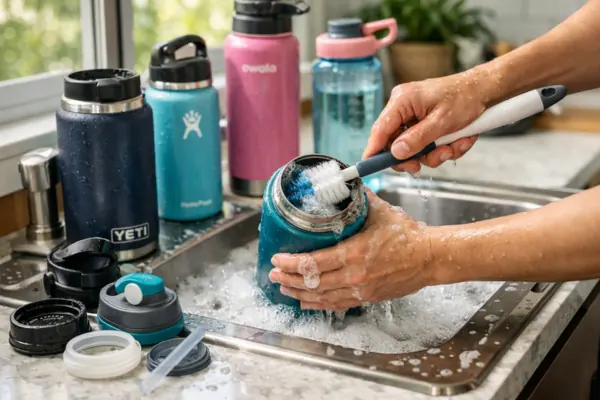
Cleaning is one of the things I pay the most attention to when looking at reusable bottles.
I have OCD, and reusable bottles can sometimes make me anxious about mold or buildup hiding inside a straw, gasket, lid, or another area that is difficult to see. I also tend to be more cautious about plastic bottles, so I personally prefer designs that are easy to open, inspect, clean thoroughly, and dry properly.
That does not mean a plastic bottle or complicated lid is automatically a bad choice. It simply means cleaning access matters to me just as much as capacity, weight, or insulation. If a bottle has hidden areas that are difficult to reach, I consider that a real usability drawback.
A hiking bottle can look clean from the outside while still holding moisture or residue inside the lid, straw, threads, or seals. A simple cleaning routine can help prevent odors, buildup, and unpleasant tastes, especially if you use electrolyte or flavored drink mixes.
Quick Cleaning Rule
- Plain water only → Rinse after use
- Electrolytes or flavored drinks → Wash the same day
- Straw lid → Take removable parts apart
- Backpacking filter → Follow the filter-specific cleaning method
- Long-term storage → Clean and dry everything properly
1. Clean Your Bottle After Each Use
For regular day-to-day cleaning:
- Empty any leftover drink.
- Rinse the bottle with warm water.
- Add a little dish soap and scrub with a bottle brush.
- Pay attention to threads, seals, and the underside of the lid.
- Rinse thoroughly.
- Leave the bottle open until completely dry.
If you have used an electrolyte mix, juice, or another flavored drink, clean the bottle as soon as possible rather than leaving it overnight.
Expert Tip
Store an empty bottle with the cap off or loosely fitted. Trapped moisture can create stale smells even in a bottle that looked clean.
2. Deep-Clean Straw Lids
Straw lids need more attention because liquid can sit inside small tubes and gaskets.
For Owala, Stanley, and Klean Kanteen-Style Straw Lids:
- Remove the lid and straw.
- Take out removable seals or gaskets according to the manufacturer’s instructions.
- Wash each piece with warm soapy water.
- Run a small straw brush through the drinking tube.
- Rinse everything thoroughly.
- Let all parts dry separately before reassembling.
Owala’s own cleaning instructions specifically recommend separating the removable parts and cleaning around the gaskets and straw rather than washing only the visible surface.
For Hard-to-Reach Buildup
Bottle-cleaning tablets can be useful for compatible bottles and lids. Follow the tablet and bottle manufacturer’s instructions rather than mixing random cleaning chemicals.
3. Remove Lingering Odors
If your bottle still smells after normal washing:
- Wash it thoroughly with dish soap first.
- For compatible bottles, try warm water with a small amount of baking soda.
- Let it sit, then rinse thoroughly.
- Air-dry the bottle completely.
- Avoid leaving sugary or flavored drinks inside for long periods.
Stainless steel generally holds onto flavors and odors less readily than many plastics, but it still needs regular cleaning, especially around the cap and straw.
4. Clean Soft Bottles Carefully
Soft flasks and collapsible bottles such as the Platypus Platy are harder to scrub internally.
A simple routine is:
- Rinse immediately after use.
- Add warm soapy water.
- Shake the flask thoroughly.
- Use a compatible reservoir brush if the opening allows it.
- Rinse several times.
- Prop it open and allow the inside to dry fully.
Avoid aggressive brushes or sharp tools that could damage thin flask material.
5. Maintain the Katadyn BeFree Correctly
The Katadyn BeFree does not need traditional syringe backflushing.
If the flow starts slowing:
- Fill the flask with clean water.
- Attach the filter.
- Shake the bottle, or remove the filter and swish the membrane in fresh water.
- Repeat if needed.
Katadyn specifically describes the BeFree’s EZ-Clean membrane as being cleaned by shaking or swishing, with no backflushing tools required.
For long-term storage, Katadyn recommends disinfecting the system according to its instructions and allowing the components to air-dry completely before storage.
Important
Do not scrub the hollow-fiber membrane with a brush. Treat the filter separately from the bottle itself.
6. Maintain Sawyer Filters Correctly
If you use a Sawyer Squeeze with the NOBO or CNOC ThruBottle, maintenance is different from the BeFree.
Sawyer recommends:
- Backwashing when flow begins to slow
- Backwashing after outings
- Cleaning before prolonged storage
- Backwashing again when returning the filter to use
- Sanitizing before long-term storage
Use clean water and the Sawyer backwash syringe or compatible cleaning method to push water opposite the normal filtering direction.
Never Let a Hollow-Fiber Filter Freeze
Once a filter has been used and contains moisture, freezing can damage its fibers. Follow the manufacturer’s cold-weather storage instructions.
7. Keep These Cleaning Tools at Home
You do not need a complicated cleaning kit.
| Tool | Useful For |
|---|---|
| Long bottle brush | Wide-mouth and standard bottles |
| Small straw brush | Straw tubes and narrow openings |
| Soft detail brush | Lid grooves and threads |
| Bottle-cleaning tablets | Occasional deep cleaning |
| Reservoir brush | Soft bottles and hydration reservoirs |
| Manufacturer cleaning syringe | Compatible filters such as Sawyer |
Simple Maintenance Schedule
Tap each step to see exactly what your bottle needs and when to clean it.
01 After Every Use Quick rinse and proper drying
02 After Flavored Drinks Wash it the same day
- Wash with warm water and dish soap.
- Scrub the inside with a bottle brush.
- Clean the lid, threads, and seals.
- Rinse thoroughly and air-dry.
03 Every Few Uses Inspect hidden areas
- Silicone seals and gaskets
- Straw tubes
- Lid crevices
- Cap threads
04 Before Long-Term Storage Deep-clean before putting it away
05 For Water Filters Use the correct filter-specific method
- Katadyn BeFree: clean by shaking or swishing the membrane in clean water.
- Sawyer Squeeze: backwash according to Sawyer's instructions.
- Sanitize and store filters according to the manufacturer's guidance.
- Protect used hollow-fiber filters from freezing.
Budget Breakdown: Finding the Right Bottle at Your Price
You do not need to spend $50 on a hiking bottle to get something reliable. The best price range depends on whether you are paying for low weight, insulation, filter compatibility, or extra durability.
Price Note: Prices below are estimates based on current manufacturer pricing. They can change by color, retailer, availability, and seasonal sales.
1. Under $20 | Best for Value and Low Weight
If keeping both cost and pack weight low matters most, this is actually a very strong category.
- Nalgene Wide Mouth Sustain – around $17
Best value for hikers who want a durable 1-liter hard bottle that is easy to clean and works well around backcountry filters. - Igneous NOBO – around $19
Best budget choice for ultralight hikers. At only about 2.3 oz, you get a reusable hard-sided bottle with direct compatibility with common 28 mm filters. - Platypus Platy 2.0L – around $20
Best value if you need maximum water capacity for very little bottle weight. Its 2-liter capacity is especially useful for camp water and dry stretches.
Best Buy Under $20:
Choose Nalgene for all-around use, NOBO for ultralight backpacking, or Platy when extra water capacity matters most.
2. $20–$40 – Best Balance of Features and Price
This is where you start getting more convenient lids, stainless-steel construction, and insulation without moving into premium pricing.
- Klean Kanteen Classic 27 oz – around $22
A good choice if you prefer stainless steel but do not need insulation. - Owala FreeSip 24 oz – around $30
My strongest all-around option in this range for day hikers who want insulation and the convenient sip-or-swig FreeSip lid. - Stanley IceFlow 24 oz – around $35
Best for hikers who want an insulated straw bottle with a removable spout, strong handle, and easy everyday usability.
Current manufacturer pricing places the Klean Kanteen around $21.95, Owala at about $29.99, and Stanley around $35.
Best Buy from $20–$40:
For most day hikers, I would choose the Owala FreeSip because it gives you insulation and easier drinking without reaching premium-bottle pricing.
3. $40+ | Premium Insulation and Specialized Features
Spending more makes the most sense when you specifically need strong insulation, rugged construction, or an integrated filtration system.
- Hydro Flask Lightweight Trail 32 oz – roughly $45–55
A premium option for hikers who want a full 32 oz insulated bottle while keeping weight lower than many traditional stainless-steel designs. - YETI Rambler 36 oz – around $50
Best for car camping and short hot-weather hikes where durability, large capacity, and insulation matter more than weight.
Hydro Flask pricing varies by exact lightweight model and availability, but current U.S. 32 oz lightweight options sit around $50, while YETI currently lists the 36 oz Rambler at about $50.
Is $40+ Worth It?
Pay more if you will genuinely benefit from insulation or heavy-duty construction. For long-distance backpacking, spending more does not automatically mean getting a better hiking bottle, a lightweight $19 NOBO may suit the trip far better than a $50 YETI.
Quick Budget Pick
| Your Budget | Best Starting Point |
|---|---|
| Under $20 | Nalgene for value / NOBO for ultralight |
| $20–$40 | Owala FreeSip for most day hikers |
| $40+ | Hydro Flask for lighter insulation / YETI for rugged use |
Frequently Asked Questions
Are insulated water bottles worth the weight for hiking?
It depends on the trip. Insulated bottles make the most sense for hot-weather day hikes, short trips, and car camping, where cold water may be worth the extra weight. For thru-hiking and multi-day backpacking, a lightweight non-insulated bottle usually gives you much better capacity for the weight.
The real question is not “Is insulation better?” but “Is insulation worth carrying on this hike?”
How do I clean a hiking water bottle with a straw lid?
Take the lid apart as much as the manufacturer allows and clean each piece separately.
- Remove the straw, spout, and removable gasket.
- Wash everything with warm soapy water.
- Use a small straw brush for narrow tubes.
- Rinse thoroughly.
- Let every piece dry completely before putting the lid back together.
The Stanley IceFlow 2.0 has a removable spout for deeper cleaning, while Owala also recommends cleaning removable lid components separately.
Which hiking water bottles work with Sawyer filters?
For the easiest setup, look for a bottle with compatible 28 mm / 28-410 threading.
- Igneous NOBO: Sawyer Squeeze screws directly onto the bottle.
- CNOC ThruBottle: Designed around common 28 mm backpacking-filter setups.
- Nalgene Wide Mouth: Works with many filtration systems, but it is not the same direct-thread setup as a 28 mm bottle.
- Hydro Flask Trail: Its wide mouth works with many backcountry filtration setups.
- Katadyn BeFree: Uses its own integrated filter, so you do not need a Sawyer.
Igneous specifically confirms direct Sawyer Squeeze compatibility for the NOBO, while Nalgene and Hydro Flask describe their openings as compatible with many backcountry filtration devices.
How much water should I carry on a hike?
There is no single amount that works for every hike.
A useful starting point is around 0.5 liter per hour in moderate conditions, with needs increasing as heat and effort rise. Strenuous hiking in hot weather may require around 1 liter per hour or more for some people.
Before deciding how much to carry, check:
- Weather and temperature
- Trail difficulty
- Length of the hike
- Reliable water sources
- Whether you carry a filter
- Length of the longest dry section
For long dry stretches, carrying extra collapsible capacity such as a Platypus Platy can be more practical than carrying several rigid bottles.
Do plastic water bottles shed microplastics?
Research shows that plastic bottles and containers can release microplastics, but the amount depends on the material, wear, heat, abrasion, and how the bottle is used. Recent research has also found measurable shedding from some reusable plastics, including Tritan under certain test conditions.
I would not claim that HDPE always sheds fewer microplastics than PET because current evidence is not strong enough for such a broad comparison.
Also, BPA-free does not mean microplastic-free. If reducing plastic contact is your main priority, a stainless-steel bottle reduces plastic contact with the bottle body, although many lids, straws, and seals still contain plastic or silicone.
Will a hiking water bottle fit in my backpack side pocket?
It depends on both the bottle diameter and your backpack.
Slim bottles such as the NOBO and CNOC ThruBottle usually work better with narrow pockets, while wider insulated bottles can be more difficult to fit. A standard 32 oz Nalgene is about 3.5 inches wide, while the 24 oz Owala FreeSip is about 3.12 inches in diameter.
The safest option is simple: measure your pack pocket before buying, especially if you are choosing a large insulated bottle.
Can I put hot liquids in my hiking water bottle?
Check the specific bottle and lid, not just the bottle material.
- Hydro Flask Trail: Designed for both hot and cold drinks, with Hydro Flask claiming up to 12 hours hot.
- YETI Rambler: Some bottle caps, including the standard Chug Cap, can be used within YETI’s stated temperature limits; straw caps are not intended for hot drinks.
- Owala FreeSip: Owala specifically says the stainless FreeSip should not be used with hot liquids.
- Stanley IceFlow: Stanley markets this model primarily for cold and iced hydration, so I would not treat it as a hot-drink bottle unless Stanley specifically approves hot use for your exact lid.
- Soft flasks and filter bottles: Always follow the manufacturer’s temperature guidance rather than assuming hot liquids are safe.
Final Thoughts: Choose the Bottle That Fits Your Hike
There is no single hiking water bottle that works best for everyone. The right choice depends on your trip type, weight tolerance, water needs, and filter setup.
For short day hikes, an insulated bottle can be worth carrying if you enjoy cold water. For backpacking and thru-hiking, lighter bottles usually make more sense because every extra ounce adds up over long distances.
If you regularly refill from streams or other backcountry sources, make filter compatibility part of your decision. A bottle that works directly with your filter can make your setup much simpler on the trail.
Still unsure? Go back to the Quick Picks and Trip-Type Recommendation Matrix above. They are designed to help you narrow the options based on how you actually hike.
A good reusable bottle can also serve you for years with proper care, which makes it a better long-term choice than repeatedly buying disposable bottles.
Zainab Khursheed!
Hey there, I’m Zainab. I created Water Bottle Experts to help you choose the right water bottle without getting overwhelmed by materials, sizes, lids, insulation, and filter options.
For this hiking water bottle guide, I compared each bottle’s capacity, empty weight, material, dimensions, insulation, lid design, filter compatibility, cleaning needs, pack fit, and overall value. I also reviewed official manufacturer specifications, reliable outdoor gear sources, and recurring user feedback to understand how each bottle performs for different types of hikers.
My goal is to give you practical and honest guidance so you can choose a bottle that fits your hiking style—whether you need something lightweight for backpacking, insulated for hot day hikes, compatible with a water filter, or simply easy to carry, clean, and use on the trail.