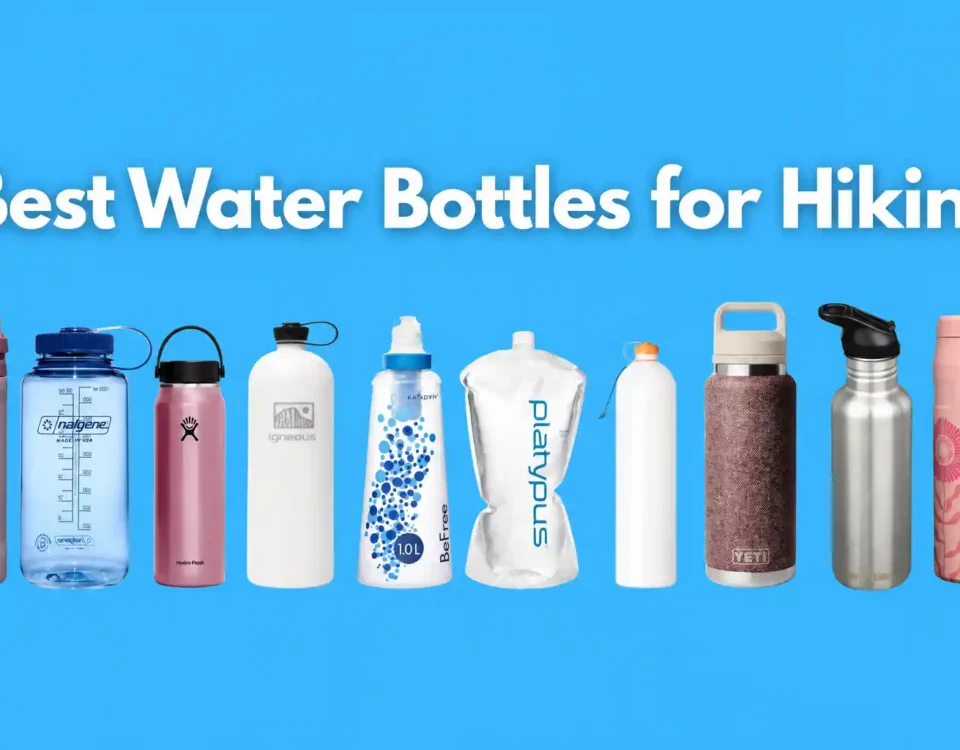
The Smartwater 1L is the lightest rigid bottle at 1.2 oz. The Platypus Platy 2L is lighter per ounce of capacity (1.3 oz for 2 liters), but it’s a collapsible bottle. For a reusable hard bottle, the Cnoc ThruBottle and Igneous NOBO are the lightest at around 2.2–2.3 oz.

- Home
- Buying Guides
HYDROGEN WATER DRINKWARES
- Size & Comparisons
- Education
7 Best Lightweight Water Bottles for Hiking, Travel & Everyday Use in 2026
Leave a comment / Blog / By Zainab.K / 22 Aug 2026
CHAPTERS
Quick Answer: What Is the Best Lightweight Water Bottle in 2026?
For the lowest possible weight, Smartwater 1L is my top pick. It weighs around 1.2 oz, carries a full liter, fits easily in backpack side pockets, and works with common 28mm filters such as the Sawyer Squeeze.
If you want a more durable reusable option, choose the Igneous NOBO 1L. For extra water capacity with very little empty weight, the Platypus Platy 2L is the better choice.
- Best overall for ultralight use: Smartwater 1L
- Best reusable option: Igneous NOBO 1L
- Best for extra capacity: Platypus Platy 2L
Disclaimer: This article is based on manufacturer specifications, independent outdoor research, and user feedback. I do not claim hands-on testing. If the article contains affiliate links, I may earn a commission at no extra cost to you.
Choosing a lightweight bottle is not only about saving grams. The wrong bottle can leak, feel uncomfortable, or fail during long hikes.
You can spend hours cutting weight from your backpack, then carry a bottle that adds more bulk than necessary.
A good lightweight water bottle should save ounces without becoming flimsy, awkward to clean, or inconvenient to carry.
For this guide, we compared published weights, capacity, materials, durability, lid design, filter compatibility, manufacturer specifications, and feedback from hikers, travelers, and everyday users. No invented testing claims.
We also included different bottle styles, from ultralight plastic bottles and collapsible flasks to premium titanium options.
The goal is simple: help you carry less without giving up reliability or convenience.
You’ll learn which bottles offer the best weight-to-capacity balance, which work well for hiking and travel, which pack down easily, and which pair with popular water filters.
Want the fastest answer? Jump to the comparison table. Otherwise, keep reading for the best lightweight water bottles of 2026 and what each one does best.
Material Preference
For everyday use, I personally prefer stainless steel or titanium bottles because they feel more durable, premium, and easier to maintain for long-term use.
Plastic bottles can still be a practical choice for hiking and backpacking where weight matters most. If choosing plastic, always select bottles from trusted brands, avoid low-quality materials, and do not expose them to excessive heat or sunlight for long periods.
My simple approach:
- Daily use: Stainless steel or titanium
Outdoor ultralight use: High-quality plastic can be a practical option when saving weight is the priority.
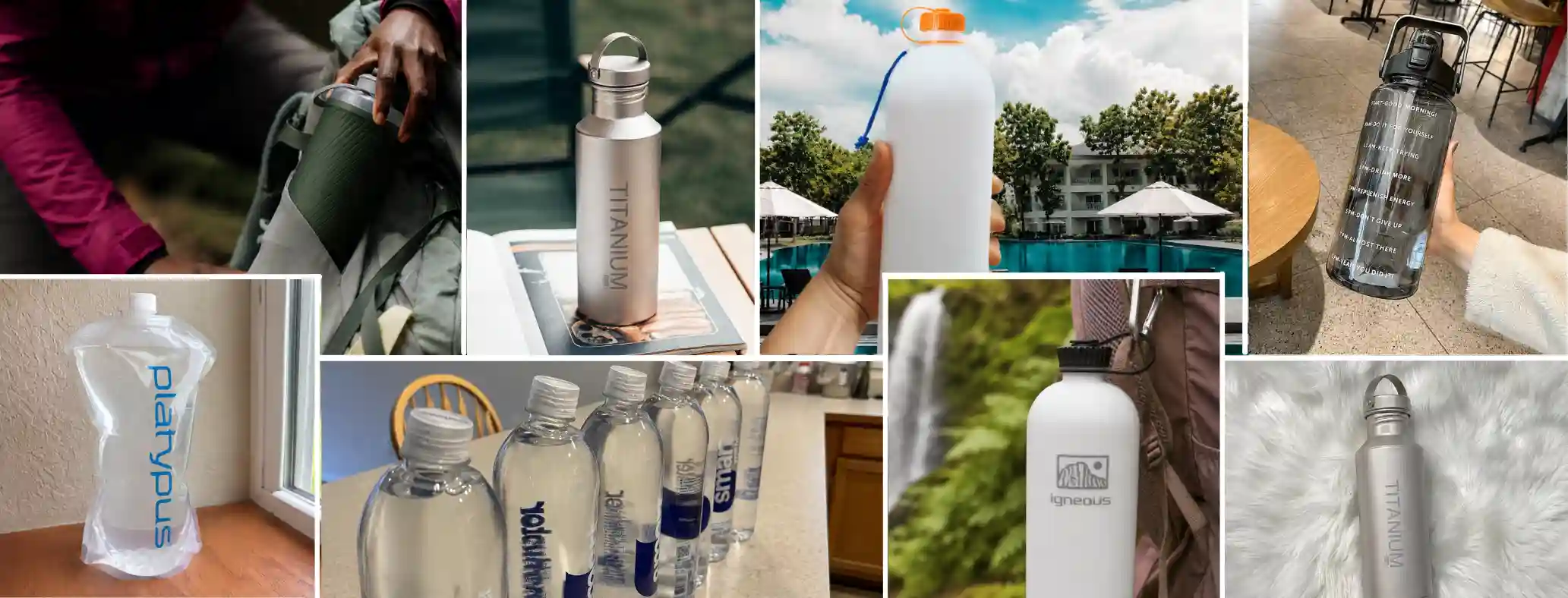
Smartwater | Nalgene Wide | Platypus Platy 2L | HydraPak Flux | Vargo Titanium | Igneous NOBO | CNOC ThruBottle |
|---|---|---|---|---|---|---|
 |  |  |  |  |  |  |
What Makes a Water Bottle Lightweight: Materials and Design

A bottle feels lightweight because of more than its material. Wall thickness, cap style, mouth size, and bottle shape all affect the final weight.
Best Lightweight Bottle Materials
1. PET Plastic
PET bottles, including Smartwater-style bottles, are extremely light and easy to carry. The downside is lower long-term durability compared with thicker reusable bottles.
2. HDPE
HDPE is slightly heavier but more flexible and resistant to cracking. It offers a good balance between low weight and durability.
3. Collapsible Materials
Soft bottles made from nylon and polyethylene films fold almost flat when empty. They save both weight and pack space, but can be harder to clean and stand upright.
4. Titanium
Titanium is strong, corrosion-resistant, and does not usually affect water taste. It is light for a metal bottle, but still heavier and more expensive than thin plastic options.
5. Hybrid Designs
Hybrid bottles, such as the HydraPak Flux, combine a flexible body with added structure. This makes them easier to hold while keeping weight and packed size low.
Expert Tip: Material alone does not determine weight. Always compare the actual weight of the exact bottle size, because wall thickness can make a big difference.
Design Features That Save Weight
1. Simple Caps
Basic screw caps are usually lighter than straw lids, flip tops, and multi-part mechanisms.
2. Mouth Size
Narrow mouths can save a few grams. Wide mouths add convenience because they are easier to clean, fill with ice, and use with powders.
3. Measurement Markings
Volume markings add almost no noticeable weight but are useful for cooking, mixing drinks, and tracking water.
4. Tethered Caps
A tethered cap adds very little weight and helps prevent losing the lid while hiking, filling, or filtering water.
What Matters Most?
Do not choose a bottle based on weight alone.
Compare weight, capacity, durability, cleaning, pack fit, and filter compatibility together. The best lightweight water bottle is the one that saves ounces without making everyday use harder.
If temperature retention is also important for your needs, check my guide on the best insulated water bottles to compare options designed for keeping drinks hot or cold for longer.
Buyer’s Guide: How to Choose the Best Lightweight Water Bottle

The lightest bottle is not always the best one. Your activity, filter setup, capacity needs, and budget matter just as much as the number on the scale.
Step 1: Match the Bottle to Your Activity
- Ultralight backpacking: Prioritize low weight and filter compatibility. Bottles such as the Smartwater 1L and CNOC ThruBottle are popular choices because they add very little pack weight.
- Day hiking and travel: A few extra ounces can buy better durability and easier handling. Nalgene works well when toughness matters, while collapsible bottles save space when empty.
- Gym and everyday use: Look for a leak-resistant lid, easy cleaning, and comfortable drinking. Convenience usually matters more here than saving the final few grams.
- Cold weather: Wide-mouth bottles are easier to open with gloves. Simple lids also have fewer small parts that can become difficult to operate in freezing conditions.
Step 2: Choose the Right Material
| Material | Weight | Durability | Taste | Cost |
|---|---|---|---|---|
| PET/HDPE Plastic | Very light | Moderate | May retain flavours | Low |
| Collapsible Film | Very light | Moderate | Usually neutral | Low–Mid |
| Titanium | Light for metal | Very high | Neutral | High |
Plastic is the lightest and cheapest. Collapsible bottles save the most pack space. Titanium costs more but offers excellent durability.
Step 3: Check Water Filter Compatibility
If you use a Sawyer Squeeze, Sawyer Mini, or similar filter, check the bottle thread before buying.
Many backpacking filters use a 28mm thread, and some bottles such as Smartwater and CNOC models are designed around this common size.
Wide-mouth Nalgenes and many metal bottles usually need a different connection or adapter.
Expert Tip: Test your filter and bottle together before a trip. Similar-looking threads do not always seal properly under pressure.
Step 4: Compare Weight With Capacity
A larger bottle can actually be more weight-efficient than a smaller one.
We compare this using a Weight-per-Ounce-of-Capacity Score:
Bottle weight ÷ fluid-ounce capacity = efficiency score
Lower is better.
| Bottle | Empty Weight | Capacity | Score |
|---|---|---|---|
| Platypus Platy 2L | 1.3 oz | 70 oz | 0.019 |
| Smartwater 1L | 1.2 oz | 33.8 oz | 0.035 |
| Nalgene 1L | 6.3 oz | 32 oz | 0.197 |
This shows why capacity matters. The Platypus carries more water for each ounce of bottle weight, even though it is larger.
Step 5: Balance Price and Longevity
- Under $5: Simple PET bottles can be extremely light, but replace them once they become damaged or heavily worn.
- Around $15–$30: This range includes many reusable collapsible and lightweight plastic bottles with better durability and features.
- $80+: Titanium sits at the premium end. You pay more for long-term durability, corrosion resistance, and a neutral drinking surface.
Prices are approximate and can change by retailer, size, and region.
Quick Buying Rule
Choose based on your main priority:
- Lowest weight: PET or collapsible bottle
- Best packability: Collapsible design
- Best durability: Titanium or sturdy reusable plastic
- Best for filters: Confirm 28mm compatibility
- Best everyday balance: Lightweight reusable plastic
The best lightweight water bottle is the one that saves weight without making your setup less reliable or harder to use.
If durability is your main priority rather than minimum weight, explore this guide to the best durable water bottles for long-term everyday use, travel, and outdoor activities.
Top Pick
Smartwater 1L
Smartwater 1L is my top pick for maximum weight savings. At around 1.2 oz, it carries a full liter and works with popular 28mm filters. Simple, affordable, and ideal for ultralight backpacking.
This article may contain affiliate links. As an Amazon Associate, I earn from qualifying purchases at no extra cost to you.
Best Lightweight Water Bottles of 2026: Research-Based Picks
We compared verified weight, capacity, materials, filter compatibility, design, manufacturer information, and independent outdoor research to see where each bottle makes the most sense.
There is no perfect bottle for everyone. The right choice depends on whether you care most about minimum weight, durability, packability, or water-filter compatibility.
Smartwater | Nalgene | Platypus Platy | HydraPak Flux | Vargo Titanium | Igneous NOBO | CNOC ThruBottle | |
|---|---|---|---|---|---|---|---|
| | | | | | | |
Capacity | 1L | ~1L | 2L | 1L | 650 ml | 1L | 1L |
Material | Pet Plastic | Tritan Renew | Nylon/Polyethylene film | TPU/POM | Pure Titanium | HDPE Plastic | HDPE Plastic |
Weight | 34 g | 177 g | 36 g | 102 g | 111 g | 65 g | 63 g |
1. Smartwater 1L
Best for Minimum Weight
Smartwater 1L
At around 1.2 oz, Smartwater gives you excellent capacity with almost no extra pack weight. Its slim shape fits side pockets easily, while 28mm filter compatibility makes it a practical trail choice.
PROS
-
Extremely lightweight at around 1.2 oz (34g)
-
Extremely lightweight at around 1.2 oz (34g)
-
Very affordable and easy to replace
-
Fits most backpack side pockets easily
-
Compatible with common 28mm water filters
CONS
-
Less durable than purpose-built reusable bottles
-
Narrow opening makes cleaning and adding powders difficult

Weight: ~1.2 oz
Capacity: 1L
Material: PET plastic
Filter fit: Common 28mm filters, including Sawyer systems
Smartwater is popular in ultralight backpacking for a simple reason: very little bottle weight for a full liter of capacity.
Its slim shape also slides easily into most backpack side pockets, and the common thread works with popular squeeze filters.
Independent backpacking sources continue to list it among the lightest practical hard-sided options.
Main trade-off: The narrow mouth is harder to clean or fill with powders, and PET beverage bottles are not purpose-built as long-term reusable outdoor gear.
Best for: Thru-hiking, ultralight backpacking, and tight budgets.
My take: Choose Smartwater when every ounce matters. Choose a purpose-built reusable option if durability and repeated use matter more.
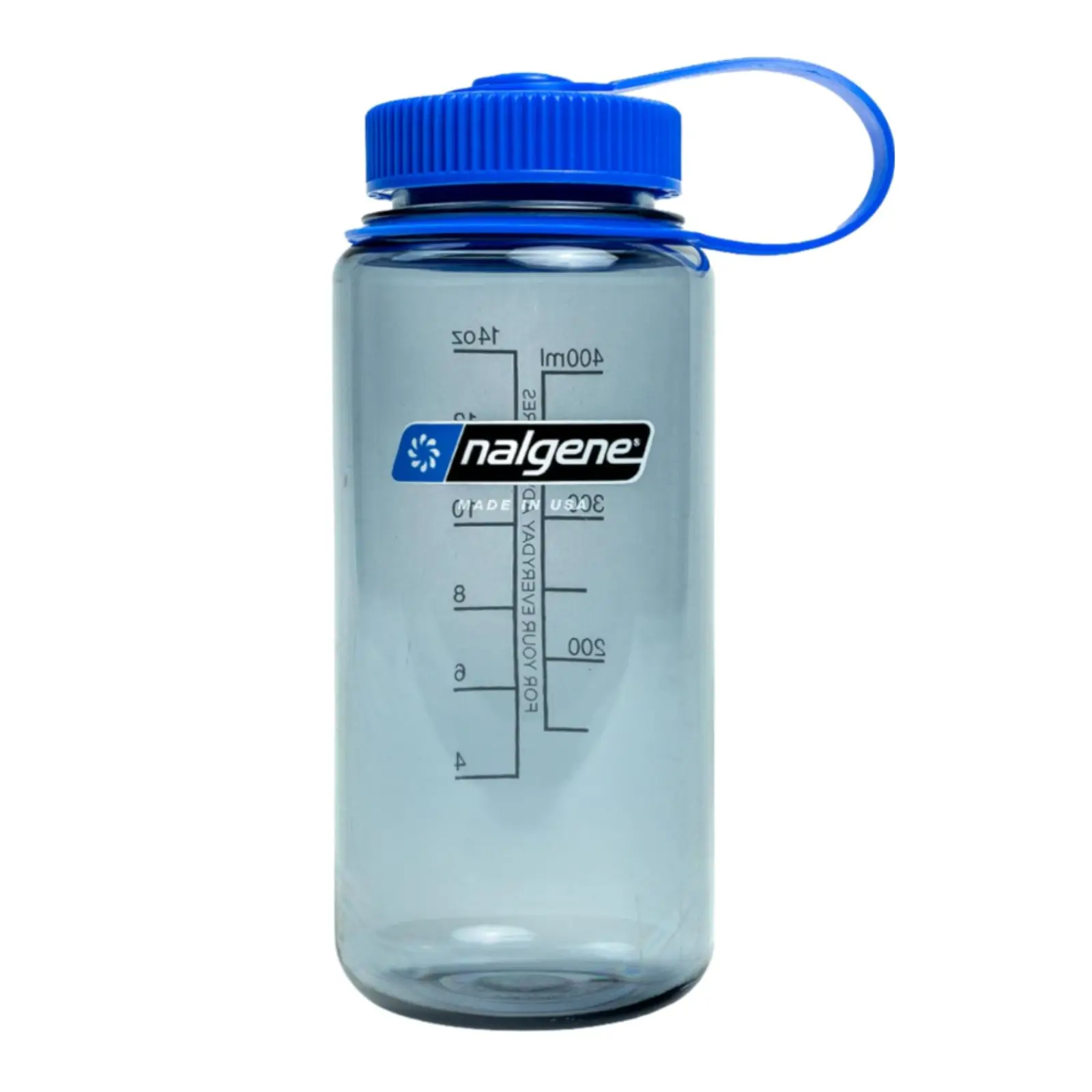
2. Nalgene Wide Mouth Sustain
Best for Durability

Nalgene Wide Mouth Sustain
Choose the Nalgene Wide Mouth Sustain when durability matters more than shaving every ounce. Its wide opening makes filling and cleaning easy, making it better suited to day hikes, travel, and everyday use.
PROS
-
Extremely durable Tritan Renew construction
-
Wide mouth makes filling, cleaning, and adding ice easy
-
Resistant to cracks and outdoor abuse
-
Comfortable for everyday carry and travel
-
Long-lasting reusable design
CONS
-
Much heavier than ultralight bottle options
-
Wide opening can spill easier while drinking on the move

Weight: 6.25 oz
Capacity: 32 oz
Material: Tritan Renew
Price: $16.99 at the time of research
The Nalgene is much heavier than the ultralight bottles above, but that extra weight buys durability, a leak-resistant design, easy cleaning, and a genuinely useful wide mouth.
Nalgene also lists it as dishwasher-safe and compatible with many filtration devices.
Independent testing from CleverHiker also rated durability as one of its strongest qualities while noting that it is heavier than ultralight alternatives.
Nalgene bottles are available in multiple sizes, so choosing the right capacity depends on your activity and daily needs. This Nalgene bottles size comparison explains the differences between popular sizes and their best uses.
Main trade-off: At more than five times the weight of Smartwater, it is difficult to justify for strict ultralight packing.
Best for: Day hiking, camping, travel, gym use, and everyday carry.
My take: Pick the Nalgene when you would rather carry a few extra ounces than worry about a delicate bottle.
3. Platypus Platy 2L
Best Weight-to-Capacity Ratio
Platypus Platy 2L
The Platypus Platy 2L delivers two liters of capacity at an impressively low weight. It packs almost flat when empty, making it an excellent choice for extra trail water without extra bulk.
PROS
-
Exceptional capacity for very low weight
-
Packs almost flat when empty
-
Ideal for carrying backup water on long hikes
-
Saves significant backpack space
-
Works well with many outdoor filtration systems
CONS
-
Less comfortable to drink from compared with rigid bottles
-
Cannot stand upright when partially filled
-
Softer material requires careful handling

Weight: 1.3 oz
Capacity: 2L / 70 fl oz
Material: Nylon/polyethylene film
Price: $19.95 at the time of research
This is an impressive amount of water storage for just 1.3 ounces of bottle weight. When empty, the Platy flattens down, making it useful for dry stretches where you need extra capacity only part of the time.
Platypus also confirms that it can pair with its filtration systems and other compatible water filters.
Main trade-off: A soft bottle is less stable than a rigid one and needs more care when cleaning and drying.
Best for: Backpacking, dry camps, travel, and carrying backup water.
My take: One of the smartest options when you need maximum capacity with minimum empty weight.
4. HydraPak Flux 1L
Best Structured Collapsible Bottle
HydraPak Flux 1L
The HydraPak Flux 1L gives you collapsible convenience without the floppy feel of a typical soft bottle. It packs down small yet remains easy to hold, making it a strong choice for hiking and travel.
PROS
-
Collapsible design saves packing space
-
More stable and easier to hold than traditional soft bottles
-
Durable TPU construction
-
Good choice for hiking and adventure travel
CONS
-
Heavier than simple ultralight plastic bottles
-
More expensive than basic bottle options
-
Cleaning the soft interior requires extra care

Weight: 3.6 oz
Capacity: 1L
Material: TPU and POM
Filter fit: 42mm systems
The Flux gives you some of the packability of a soft flask without feeling completely floppy. It stands upright when full, then rolls down small once empty.
The twist-to-drink nozzle, dust cover, and carry handle also make it more convenient for frequent use.
One detail matters for hikers: the current Flux uses a 42mm filter connection, compatible with options such as HydraPak’s Filter Cap and Katadyn BeFree. It is not a native 28mm Sawyer-style bottle.
Main trade-off: Heavier than basic PET and ultralight HDPE bottles.
Best for: Hiking, cycling, travel, and anyone who wants a collapsible bottle that still has structure.
My take: Worth the extra ounces when usability matters more than chasing the absolute lowest weight.
5. Vargo Titanium 650ml
Best Premium Option
Vargo Titanium
The Vargo Titanium 650ml is a premium choice for buyers who value durability and a titanium drinking surface. It costs more than plastic, but its strong, corrosion-resistant construction is built for long-term use.
PROS
-
Premium titanium construction
-
Extremely durable and corrosion resistant
-
Does not retain plastic taste or odors
-
Lightweight compared with many metal bottles
-
Suitable for long-term outdoor use
CONS
-
Very expensive compared with plastic alternatives
-
Smaller 650ml capacity limits water storage
-
Overkill for casual everyday use

Weight: 4.6 oz
Capacity: 650ml / 22 oz
Material: Titanium body
Filter fit: Not designed around the common 28mm squeeze-filter thread
Vargo’s titanium bottle is for someone who values material durability and low metal-bottle weight more than maximum capacity.
The bottle weighs 4.6 ounces and uses a titanium body with a BPA/BPS-free plastic cap and silicone sealing ring. Vargo also describes titanium as non-reactive and corrosion-resistant.
Main trade-off: You get only 650ml of capacity, and titanium costs far more than plastic.
Best for: Travel, lightweight hiking, and people who specifically prefer titanium over plastic.
My take: A premium material choice, not the best choice if your only goal is saving grams.
6. Igneous NOBO 1L
Best Reusable Smartwater Alternative
Igneous NOBO 1L
The Igneous NOBO 1L is a reusable upgrade for ultralight hikers who like the simplicity of Smartwater. It stays light, works with common 28mm filters, and adds useful features such as a tethered cap and measurement markings.
PROS
-
Lightweight HDPE construction
-
Designed specifically as a reusable Smartwater alternative
-
Includes useful features like measurement markings and tethered cap
-
More durable than disposable PET bottles
-
Compatible with common 28mm filters
CONS
-
Slightly heavier than Smartwater
-
Less compact than collapsible bottles
-
Not insulated for temperature control

Weight: 65g / ~2.3 oz
Capacity: 1L
Material: HDPE
Price: $18.99 at the time of research
Filter fit: 28-410 thread
The NOBO keeps the features ultralight hikers like about Smartwater but puts them into a bottle designed for repeated use.
Its 28-410 thread works with the Sawyer Squeeze, Platypus QuickDraw, and other common filters. You also get a tethered cap and permanent ounce/milliliter markings.
Main trade-off: It weighs roughly an ounce more than Smartwater.
Best for: Backpackers who want low weight, filter compatibility, and a purpose-built reusable bottle.
My take: That extra ounce makes sense if you want a more durable ultralight setup without giving up your 28mm filter.
7. CNOC ThruBottle 1000
Best for 28mm Water Filters
CNOC ThruBottle
The CNOC ThruBottle 1000 is built for backpackers using 28mm water filters. Its lightweight, squeezable body makes filtering simple while keeping pack weight low, a strong choice for a reusable trail setup.
PROS
-
Lightweight reusable design
-
Excellent compatibility with 28mm backpacking filters
-
Squeezable body makes water filtering easier
-
Good balance between durability and weight
-
Built specifically for outdoor filtration setups
CONS
-
Narrow opening makes cleaning more difficult
-
Not ideal for adding ice or drink powders
-
Soft construction requires careful handling

Weight: ~2.2 oz
Capacity: 1L
Material: HDPE
Price: Around $14 at the time of research
Filter fit: 28mm
The ThruBottle is built around the needs of lightweight backpackers. It has a slim body for backpack pockets, a squeezable construction, tethered cap, molded measurement markings, and a 28mm opening that works with many popular backpacking filters.
At roughly 2.2 ounces, it stays close to disposable-bottle territory while giving you a purpose-built reusable design.
Main trade-off: The narrow opening is less convenient for cleaning and adding powders.
Best for: Sawyer users, backpackers, and anyone who wants a reusable filter bottle without much extra weight.
My take: One of the strongest choices if 28mm filter compatibility is your first priority
Which Lightweight Water Bottle Should You Choose?
Keep the decision simple:
- Lowest weight: Smartwater 1L
- Best capacity for the weight: Platypus Platy 2L
- Best reusable ultralight option: Igneous NOBO
- Best for 28mm filters: CNOC ThruBottle
- Best collapsible design: HydraPak Flux
- Best for durability: Nalgene Wide Mouth Sustain
- Best titanium option: Vargo Titanium
If you are counting every gram, Smartwater or the Platy make the strongest case. If you want something designed for repeated outdoor use, NOBO and CNOC offer a better balance of low weight, useful features, and filter compatibility.
Prices are approximate and were checked during my August 2026 research. They may change by retailer or availability. My recommendations are based on verified specifications, manufacturer documentation, independent outdoor research, and user feedback. I do not claim hands-on testing of these bottles.
Lightweight Water Bottle Comparison Table
| Product | Weight (oz / g) |
Material | Capacity | Price (USD) |
Filter Compatible | Best For |
|---|---|---|---|---|---|---|
| Smartwater 1L | 1.2 oz / 34g | PET plastic | 1 L | ~$2–3 | Yes (28mm) | Ultralight backpacking, thru-hiking |
| Nalgene Wide Mouth Sustain | 6.25 oz / 177g | Tritan Renew | 32 oz (~1L) | $16.99 | Adapter may be needed for 28mm filters | Day hikes, travel, durability-focused users |
| Platypus Platy 2L | 1.3 oz / 36g | Nylon / polyethylene film | 2 L (70 fl oz) | $19.95 | Yes, filter pair-able | Extra capacity, packable backup |
| HydraPak Flux 1L | 3.6 oz / 102g | TPU, POM | 1 L | $29.00 | Yes (42mm) | Hiking, biking, structured collapsible |
| Vargo Titanium 650ml | 3.9 oz / 111g | Pure titanium | 650 ml (22 oz) | $84.95 | No standard filter compatibility listed | Taste-free, premium durability |
| Igneous NOBO 1L | 2.3 oz / 65g | HDPE plastic | 1 L | $18.99 | Yes (28-410) | Ultralight reusable, everyday carry |
| CNOC ThruBottle 1000 | 2.22 oz / 63g | HDPE plastic | 1 L | $13.99 | Yes (28mm) | Filter-compatible backpacking |
How to Care for and Maintain Your Lightweight Bottle

Lightweight bottles use less material, so proper care helps them last longer. Follow these simple steps.
1. Clean It After Use
- Wash plastic and collapsible bottles with warm water and mild dish soap.
- Use a bottle brush to clean the neck, threads, and hard-to-reach areas.
- Rinse bottles soon after using electrolyte powders or flavored drinks.
- For stubborn odors, follow the manufacturer’s deep-cleaning instructions. Some brands allow baking soda or properly diluted unscented bleach.
- Clean titanium bottles with warm water and mild soap.
- Do not place a titanium bottle directly over heat unless the manufacturer specifically says it is safe for cooking or boiling.
2. Let It Dry Completely
- Remove the cap after washing.
- Leave hard bottles open to air-dry.
- Open collapsible bottles fully so moisture does not remain trapped inside.
- If needed, prop soft bottles open or use a drying rack.
- Never store a bottle while the inside is still damp.
3. Store It Properly
- Store bottles clean and completely dry.
- Keep the cap removed or loosely attached during long-term storage.
- Avoid leaving plastic bottles in prolonged direct sunlight or excessive heat.
- If freezing water inside a bottle, leave enough empty space for expansion.
- Check the manufacturer’s instructions before freezing collapsible or rigid bottles.
4. Clean the Cap and Threads
- Rinse the cap every time you clean the bottle.
- Pay extra attention to threads, seals, valves, and drinking spouts.
- Remove any dirt or drink residue that could affect the seal.
- Check hinges and moving parts on flip-top lids for buildup or damage.
5. Know When to Replace It
Replace or retire your bottle if you notice:
- Cracks, punctures, or leaks
- Damaged threads
- A cap that no longer seals properly
- Pinholes or delamination in collapsible bottles
- Permanent deformation
- Persistent odors or tastes after proper cleaning
Thin PET bottles such as Smartwater should be inspected more often because they are originally designed as beverage packaging rather than long-term outdoor gear.
Reusable plastic, collapsible, and titanium bottles can last much longer when properly maintained.
Simple rule: If the bottle still cleans well, seals securely, and has no structural damage, keep using it. If any of those fail, it is time to replace it.
FAQs About Lightweight Water Bottles
Are lightweight plastic bottles safe to drink from?
Yes, all bottles recommended in this guide are BPA-free, and many are also BPS- and BPF-free. HDPE and PET plastics are considered safe for repeated use, though PET (Smartwater) is designed for single use and may leach chemicals over time if exposed to heat or prolonged use. For the safest long-term option, choose HDPE (NOBO, ThruBottle) or titanium.
Can I put hot liquids in a titanium bottle?
Absolutely. Titanium can handle boiling water without any issue. In fact, you can place the Vargo bottle directly on a stove or in a campfire to boil water (with the cap off). Never do this with plastic or collapsible bottles, they will melt or release harmful chemicals.
How do I know if my bottle is compatible with my water filter?
Check the thread size. The most common standard for backcountry filters (Sawyer Squeeze, Sawyer Mini) is 28mm. If your bottle has a 28mm thread, it will likely fit. Some bottles use 42mm or 63mm threads. When in doubt, test the fit at home before your trip. The Smartwater, NOBO, and ThruBottle are confirmed 28mm.
What’s the lightest water bottle available?
Can I use electrolyte powders in these bottles?
Yes, but wide-mouth bottles (Nalgene, NOBO, ThruBottle) are much easier to add powders to without spilling. Narrow-mouth bottles like the Smartwater and Vargo can be frustrating. Collapsible bottles can be used, but cleaning the residue out of the corners is harder.
How do I prevent my water from getting warm in a lightweight bottle?
Most lightweight bottles are single-wall and offer no insulation. To keep water cool, use a reflective bottle sleeve or insulator (like a HydraPak insulated sleeve) that adds minimal weight. Alternatively, bury your bottle in a shaded stream or wrap it in a wet bandana. For cold-weather use, an insulated cover can also prevent freezing.
Conclusion and Final Recommendations
The best lightweight water bottle depends on what you want to save: weight, space, money, or hassle.
Here are our final picks:
- Best for ultralight backpacking: Smartwater 1L | around 1.2 oz, inexpensive, and compatible with common 28mm filters such as the Sawyer Squeeze.
- Best reusable ultralight bottle: CNOC ThruBottle 1000 | lightweight, squeezable, and built around 28mm filter compatibility. The Igneous NOBO is another strong reusable option.
- Best for durability: Nalgene Wide Mouth Sustain | heavier than the ultralight choices, but easier to clean and better suited to everyday use.
- Best for extra capacity: Platypus Platy 2L | carries two liters while adding very little empty weight and packs flat when not needed.
- Best premium option: Vargo Titanium 650ml | a durable, corrosion-resistant choice for anyone who prefers titanium and does not mind paying more.
Do not chase the lowest number on the scale if the bottle becomes awkward to use. A few extra ounces can be worth it for better cleaning, durability, filter compatibility, or easier drinking.
My recommendation: choose the lightest bottle that still works comfortably with your pack, filtration setup, and normal routine.
Zainab Khursheed!
I’m Zainab, the creator of Water Bottle Experts. I research water bottles to help readers choose practical, lightweight, durable, and reliable options for hiking, travel, workouts, and everyday use.
For this guide, I reviewed manufacturer specifications, bottle weights, capacities, materials, filter compatibility, lid designs, packability, cleaning requirements, durability information, pricing, and feedback from users across different markets. I also compared how each bottle performs for common needs such as ultralight backpacking, day hiking, travel, gym use, and daily carry.
I do not claim to personally test every bottle featured here. My recommendations are based on worldwide research, verified product information, independent outdoor sources, and user feedback, with a focus on the details that matter most: weight, capacity, durability, ease of cleaning, filter compatibility, portability, and overall value.